

As healthcare organizations continue to navigate growing financial pressures, tightening reimbursement rules, and increasingly complex payer requirements, the need for efficient revenue cycle operations has never been more urgent. As a result, healthcare practices are actively searching for modern technology that can streamline billing processes, strengthen financial accuracy, and support predictable cash flow.
This guide highlights the top 10 RCM tools for 2026 that are transforming how providers manage the financial side of patient care. You will also learn what RCM is, what RCM tools are, their differences, and how to choose the best solution for your organization.
Top 10 RCM tools for 2026
1. Aptarro
2. NextGen
3. Waystar
4. Epic
5. Athenahealth
7. ModMed
8. CareCloud
10. AdvancedMD
What Is RCM?
Revenue Cycle Management (RCM) is the full financial lifecycle that begins the moment a patient schedules an appointment and ends when the balance for that visit is fully resolved. It is the framework that ensures providers receive timely and accurate reimbursement for the care they deliver. At its core, it brings together administrative, clinical, and financial processes into one cohesive system.
Effective RCM involves coordinated steps such as registration, insurance verification, clinical coding, charge capture, claims submission, payment posting, and denial management. Each step must be executed accurately to prevent delays, revenue leakage, or compliance issues. When RCM is structured well, organizations benefit from stable cash flow and lower administrative burden.
The table below provides a high-level view of the major components that make up RCM:
| Component | Description |
| Patient access | Registration, scheduling, and eligibility verification |
| Documentation and coding | Provider notes, diagnostic codes, procedure codes |
| Charge capture | Recording all billable services |
| Claims processing | Claim creation, scrubbing, submission, follow-up |
| Payment management | Posting, reconciliation, and remittance processing |
| Denial management | Resolving rejections, appeals, and corrections |
| Patient billing | Statements, digital billing, payment plans |
| Reporting and analytics | Key performance indicators (KPIs), revenue performance, forecasting |
Understanding RCM as a full, interconnected cycle helps organizations achieve accuracy, efficiency, and coordination across every financial touchpoint. Strong RCM is the backbone of predictable revenue and sustainable operations.
What Are RCM Tools?
RCM tools are software systems designed to streamline, organize, and automate the operational tasks that make up the revenue cycle. While RCM defines the process, RCM tools provide the technology that enables healthcare organizations to run that process more efficiently. These platforms reduce manual bottlenecks, improve visibility, and help ensure that claims move smoothly from submission to reimbursement.
Modern RCM tools support critical functions such as insurance verification, charge capture, claim preparation, error detection, denial tracking, and patient billing workflows. By bringing these steps together into a unified environment, these tools reduce errors, optimize staff workload, and provide leaders with real-time insight into financial performance. They also strengthen compliance by aligning processes with payer rules and industry standards.
Below is a table summarizing how RCM tools support and enhance the overall revenue cycle:
| Tool Function | Description |
| Workflow automation | Reduces repetitive manual tasks |
| Charge accuracy | Helps ensure correct and complete service capture |
| Claim preparation | Organizes data for clean claim submission |
| Error detection | Flags issues before they lead to denials |
| Denial insights | Identifies patterns and root causes |
| Patient financial tools | Payment portals, reminders, digital statements |
| Financial analytics | Dashboards, KPIs, performance trends |
| System integrations | Connects with EHR, PM, and billing systems |
In essence, RCM tools transform the revenue cycle from a largely manual process into a digitally supported operation, allowing teams to work smarter, reduce delays, and maintain better control over financial outcomes.
Top 10 RCM Tools for 2026
1. Aptarro
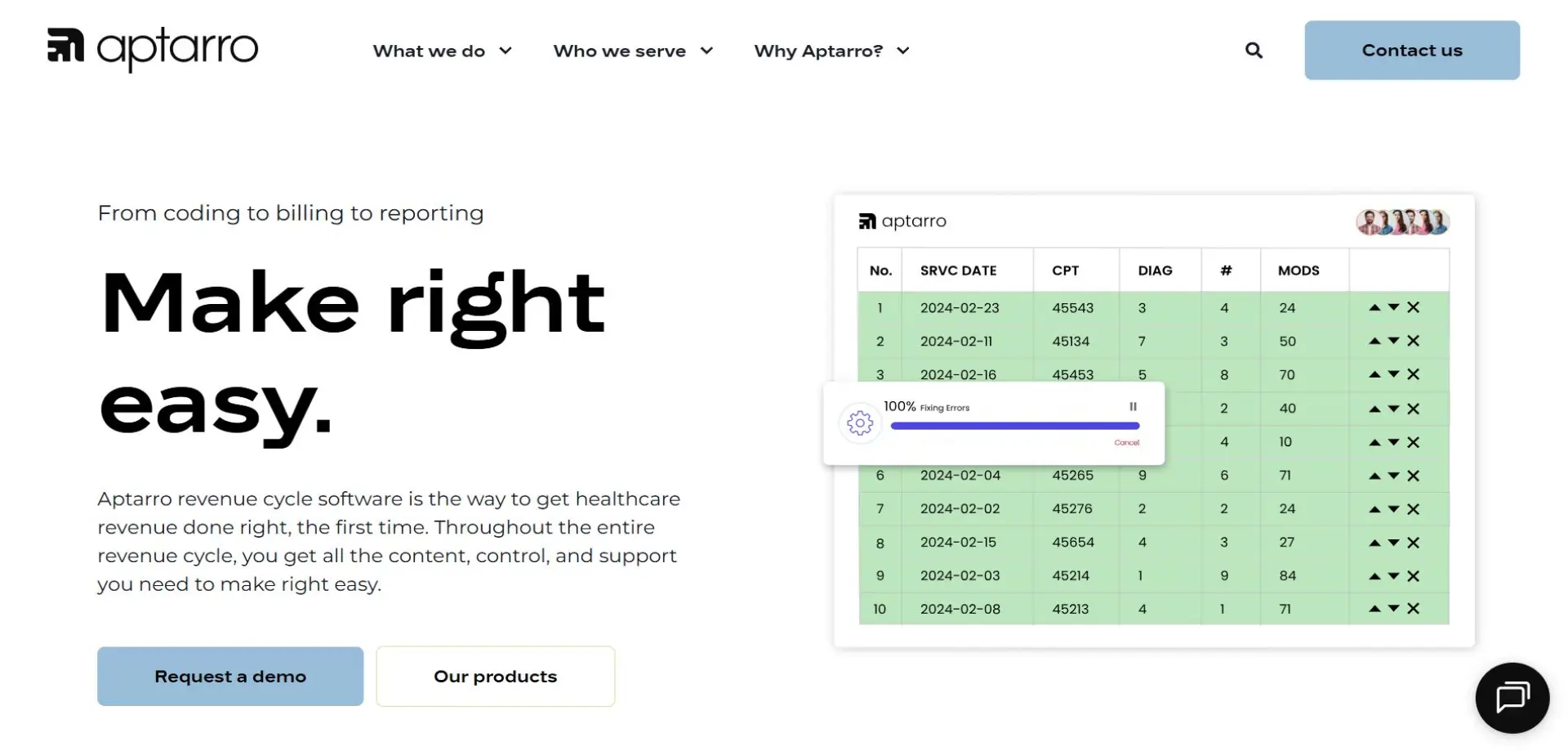
Aptarro ranks first among the top RCM tools for 2026 due to its modern, unified approach for managing the revenue cycle. Its RevCycle Engine provides a streamlined environment designed to help organizations improve financial accuracy, simplify workflows, and maintain clear visibility across the billing lifecycle. Instead of relying on fragmented systems, Aptarro supports coordinated processes that help reduce bottlenecks and strengthen overall performance.
A key advantage of Aptarro is its ability to integrate smoothly with existing technologies, offering a flexible and scalable solution for both growing practices and established healthcare groups. With an emphasis on usability and operational clarity, Aptarro also helps organizations stay organized and maintain consistency throughout the RCM process.
To explore how Aptarro can support your revenue cycle, book a demo today.
2. NextGen

NextGen is widely used by ambulatory and specialty practices that need customizable revenue cycle workflows. Its tools support charge management, claims oversight, and financial reporting, helping organizations maintain accuracy and compliance across various service types.
3. Waystar

Waystar is a popular RCM tool known for simplifying complex billing workflows. Its cloud-based system offers financial visibility, streamlined claims processing, and tools that help healthcare organizations maintain accuracy and reduce administrative effort. Waystar is often chosen for its ease of use and strong analytics capabilities.
4. Epic
Epic is built for large health systems that need a powerful, enterprise-level platform to manage complex clinical and financial workflows. Its tightly integrated EHR helps centralize billing operations, streamline data flow, and support coordinated oversight across departments and care settings.
5. Athenahealth

Athenahealth delivers a network-enabled approach to revenue cycle operations, supporting continuous optimization through shared system intelligence. The platform is widely adopted by practices seeking automated workflows, streamlined claim preparation, and improved visibility into financial trends.
6. Oracle Health
Oracle Health (formerly Cerner) offers enterprise-grade solutions for complex health organizations. Its integrated suite connects scheduling, documentation, billing, and reporting, helping large networks maintain consistency and financial control across multiple locations and service lines.
7. ModMed

ModMed is purpose-built for specialty practices, offering workflows that align closely with clinical needs. Practices in dermatology, ophthalmology, ear, nose, and throat (ENT), and similar specialties appreciate ModMed’s ability to support specialty-specific documentation and billing efficiencies.
8. CareCloud
CareCloud provides a modern, cloud-based revenue cycle solution that supports growing medical practices. It offers strong visibility into financial performance, streamlined claims processes, and patient-friendly billing tools, making it a good fit for organizations seeking scalability.
9. eClinicalWorks
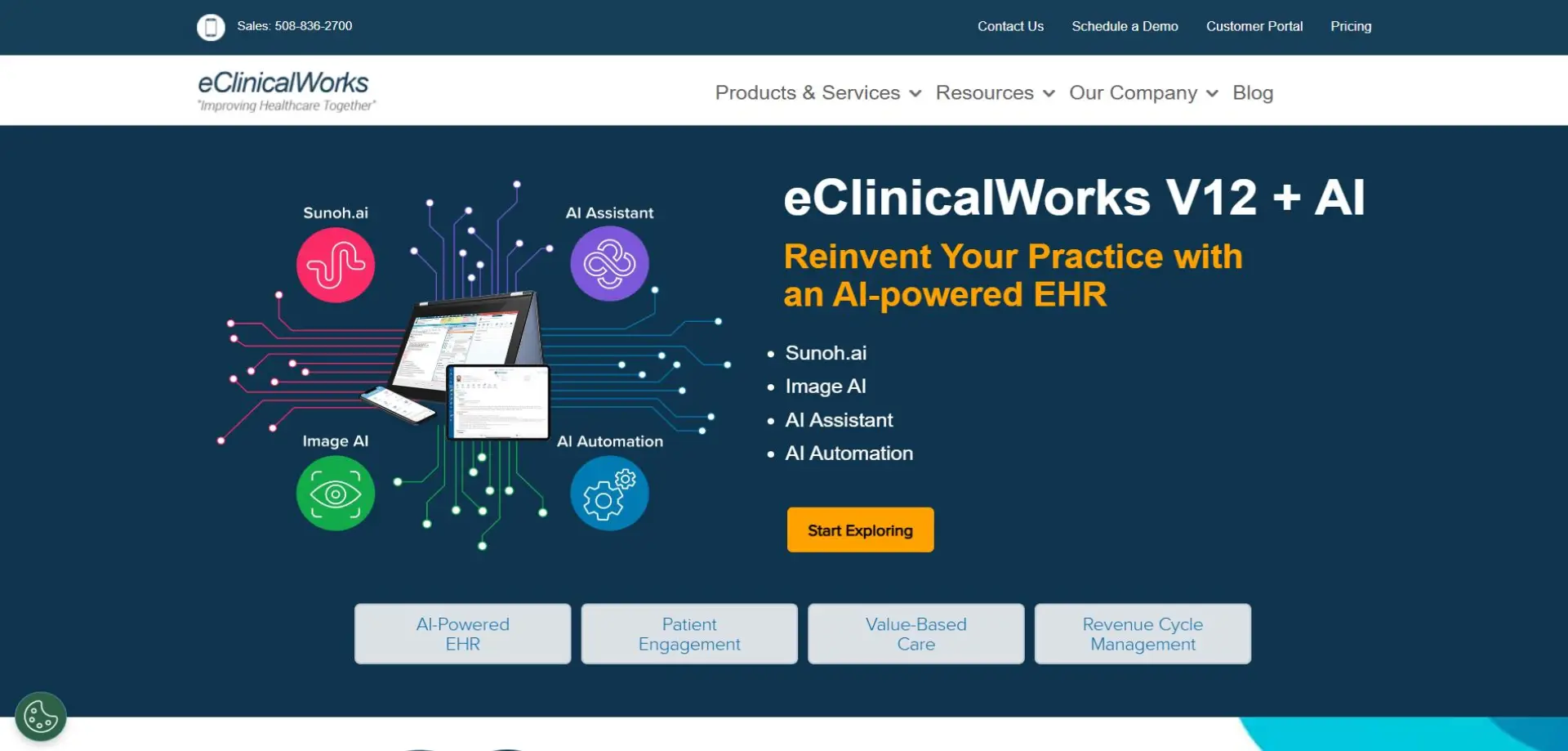
eClinicalWorks offers an RCM solution that integrates with its electronic health records (EHR), providing streamlined workflows for claims, payments, and denial management. Practices using eCW appreciate the unified environment and clear insights into billing performance and outstanding claims.
10. AdvancedMD

AdvancedMD is a cloud-based billing system designed for small to mid-sized practices. Its tools support claims submission, payment posting, and financial reporting, offering practices a flexible and lightweight platform to manage revenue cycle tasks efficiently.
Benefits of RCM Tools
Modern RCM tools help organizations reduce administrative burden, improve accuracy, and maintain predictable revenue. By streamlining financial workflows, these systems support both operational and financial stability.
Improved financial transparency
RCM tools provide clear visibility into outstanding claims, payment trends, and cash flow patterns, helping organizations make informed decisions based on real-time data.
Reduced claim delays
By organizing the claim preparation process and highlighting missing information, RCM tools help ensure that claims move through the system more quickly and with fewer interruptions.
Better staff efficiency
Automated processes allow staff to focus on higher-value tasks, reducing the time spent on repetitive activities and minimizing the likelihood of manual errors.
Key Features of RCM Tools
The strongest RCM tools share a set of core capabilities that support accurate billing and timely reimbursements. These features create a stable, organized environment for managing financial workflows.
Streamlined insurance verification
Integrating eligibility checks helps organizations confirm patient benefits early, reducing issues related to incorrect or outdated insurance information.
Organized claim preparation
By structuring data in a consistent format and centralizing information, RCM tools help teams process claims more efficiently and with fewer mistakes.
Financial performance insights
Reporting tools summarize key metrics such as denial trends, collection rates, and reimbursement timelines, providing leaders with actionable intelligence.
What to Consider When Purchasing RCM Tools
Selecting the right RCM tool requires careful evaluation of your organization’s needs, technical environment, and long-term goals. A deliberate approach ensures that the chosen solution supports sustainable growth and operational stability.
Compatibility with your existing systems
Ensuring the RCM tool integrates with your EHR, practice management (PM) system, and billing workflows will prevent data bottlenecks and reduce operational friction.
Support for organizational growth
Choose a platform that can accommodate increased claim volume, additional providers, or expanded services without requiring major system changes.
Vendor stability and assistance
Reliable customer support, accessible training resources, and consistent product updates are essential for maintaining long-term performance and compliance.
Why the Right RCM Tool Matters
As the financial landscape of healthcare continues to evolve, choosing the right RCM tool has become a strategic decision that directly influences an organization’s performance, stability, and patient experience. Modern RCM systems offer far more than simple billing functions; they create an environment where administrative efficiency, financial accuracy, and operational clarity work together to support sustainable growth.
The top RCM tools provide organizations with reliable technology, actionable insights, and structured workflows that help reduce delays and strengthen cash flow. Whether you’re looking to modernize your billing processes, improve staff productivity, or gain real-time financial visibility, the right RCM platform can transform how you manage your revenue cycle.
If you're ready to elevate your revenue operations, streamline your workflows, and bring greater visibility to your financial performance, book a demo with Aptarro today and explore how a modern RCM foundation can support your organization in 2026 and beyond.