

Healthcare providers face mounting pressure to optimize their financial operations, especially with rising costs and payer complexity increases. With this backdrop, a robust revenue cycle management (RCM) system isn’t just a back‑office tool anymore. It's a strategic asset. With the right system, your organization can automate billing, reduce denials, improve cash flow, and maintain regulatory compliance. As more healthcare providers lean into digital transformation, choosing the right RCM system has become one of the most critical decisions for financial and operational leadership.
Thankfully, there is a rich selection of RCM software available, with a mix of long-established electronic-health-record-based platforms and specialized, cloud-native tools. Some systems emphasize deep payer integration, while others focus on AI-driven workflow automation or patient financial engagement. This variety gives organizations more options, but also means decision-makers must be deliberate in evaluating the right software for their billing purposes.
Here, we highlight the top 10 RCM systems for 2026. These are leading platforms that combine proven functionality, innovation, and strategic value. From large health systems to ambulatory practices, these systems represent some of the best-in-class solutions to modernize your revenue cycle.
Top 10 RCM systems for 2026
1. Aptarro
3. Waystar
4. Athenahealth
5. Epic Systems
8. R1 RCM
10. AGS Health
What Is RCM?
Revenue Cycle Management (RCM) is the practice of managing all financial processes associated with a patient’s journey through a healthcare organization, from the first point of contact to the final payment. It encompasses patient intake, insurance verification, charge capture, claims submission, payment posting, and denial resolution. At its core, RCM ensures that providers are reimbursed accurately and efficiently, minimizing revenue leakage and administrative waste.
For many organizations, RCM is a cross-functional discipline requiring coordination between clinical, administrative, and financial teams. When implemented effectively, RCM not only improves cash flow but also enhances the patient experience. This works to reduce billing errors, eliminate surprises, and speed up issue resolution.
To clarify the core components of the RCM practice, here is a table summary:
| Aspect | Description |
| Patient Registration | Capturing accurate patient demographics and insurance information. |
| Eligibility Verification | Checking in real time if a patient’s insurance is valid and what it covers. |
| Charge Capture | Recording and coding all billable services and procedures. |
| Claims Management | Preparing, submitting, and tracking claims to payers. |
| Payment Posting | Applying payments received (from payers or patients) to the right accounts. |
| Denial Management | Identifying, analyzing, and appealing denied or rejected claims. |
| Reporting and Analytics | Generating financial and operational insights to measure performance. |
After seeing the table, it’s clear how interconnected these steps are: gaps or inefficiencies in one area can cascade into others, leading to denial, delayed payments, or lost revenue. A mature RCM practice ensures tight alignment across these phases, enabling organizations to operate more predictably and profitably.
What Are RCM Systems?
While RCM as a practice focuses on processes, roles, and workflows, RCM systems provide the digital infrastructure to automate, monitor, and optimize those processes. Rather than relying on spreadsheets, manual follow-up, and disparate tools, RCM systems centralize the revenue cycle into a unified platform. This helps make operations faster, more accurate, and more transparent.
RCM systems typically integrate with electronic health record (EHR) systems, practice management tools, and payer networks to streamline data flow. They automate tasks such as eligibility checks, claims scrubbing, payment posting, and denial tracking. Additionally, they provide dashboards and analytics to help leadership monitor financial health, uncover trends, and make data-driven decisions.
Below is a table summarizing typical functions provided by RCM systems:
| Function | Description |
| Patient Scheduling and Registration | Automates patient intake and ensures data consistency. |
| Insurance Eligibility Checks | Verifies coverage in real time to reduce rejection risk. |
| Billing and Coding | Automates charge capture, code validation, and compliance. |
| Claims Submission | Manages electronic claim generation, scrubbing, and tracking. |
| Payment Processing | Posts payments and reconciles payer and patient remittances. |
| Denial and Follow-up Management | Tracks denial reasons, opens appeal workflows, and analyzes root causes. |
| Analytics and Reporting | Offers dashboards, key performance indicators (KPIs), and predictive insights to guide strategy. |
This software layer doesn’t just make the RCM process more efficient; it elevates it. With digital tools, organizations can shift from reactive, manual operations to proactive, optimized workflows. As a result, RCM becomes not just a cost center, but a driver of financial stability and growth.
Top 10 RCM Systems for 2026
1. Aptarro
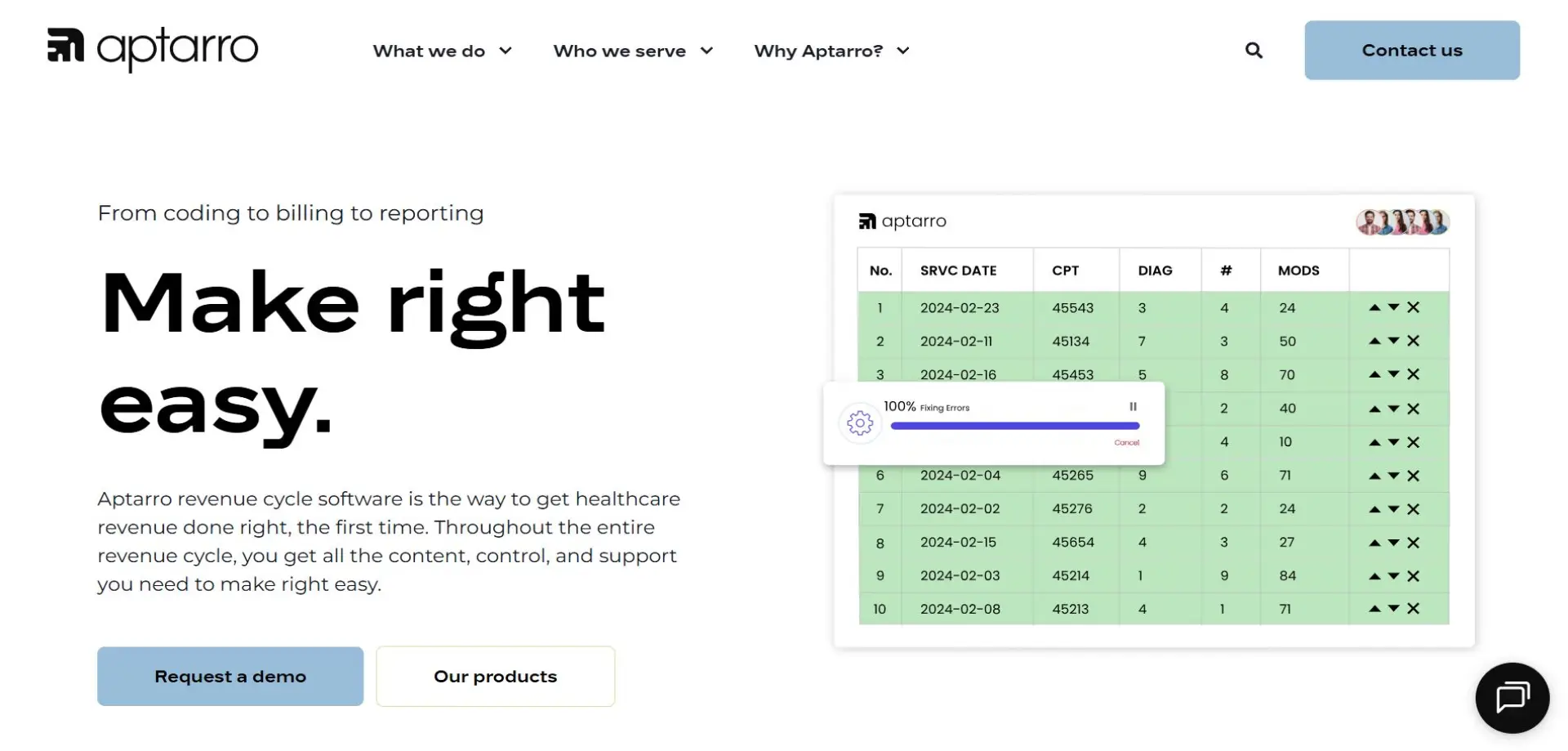
Aptarro stands out for its highly configurable, rules-based RCM platform built around its RevCycle Engine. This engine provides a comprehensive framework for managing denial prevention, claim accuracy, and continuous improvement. Aptarro’s deep payer rules engine helps minimize manual rework and ensures claims are correctly submitted the first time.
Beyond its core automation capabilities, Aptarro offers powerful analytics dashboards that allow revenue cycle leaders to monitor clean claim rates, denial trends, and financial performance in real time. The system is designed to be flexible, supporting organizations of different sizes, whether you manage ambulatory practices or a large hospital system.
Because Aptarro focuses on prevention (rather than just remediation), many of its users report improvements in accounts receivable (AR), reductions in denied claims, and greater operational efficiency overall. If you're looking for a modern, data-driven RCM system, Aptarro is a compelling choice. Book a demo today.
2. NextGen Healthcare
NextGen provides an integrated RCM and EHR platform tailored for ambulatory care. Its system streamlines practice management, billing, and collections, helping mid-sized practices maintain financial and operational alignment.
3. Waystar

Waystar provides intelligent automation and predictive analytics to streamline claims resolution and reduce denials. Its RCM platform is particularly effective in helping practices improve first-pass claim accuracy and optimize collections through automated workflows.
4. Athenahealth

Athenahealth offers a cloud-based RCM system integrated with its EHR and practice management tools. It automates billing, claims management, and financial reporting, making it well-suited for practices seeking a unified clinical and financial platform.
5. Epic Systems
Epic’s RCM functionality is embedded within its comprehensive EHR ecosystem, providing seamless coordination between clinical operations and billing processes. This integration helps large hospital systems improve claim accuracy and streamline revenue collection.
6. Oracle Health
Oracle Health delivers a cloud-native RCM platform that unifies patient accounting, claims, and financial engagement. Its scalable architecture and centralized workflows are ideal for larger organizations seeking efficiency and detailed analytics.
7. eClinicalWorks
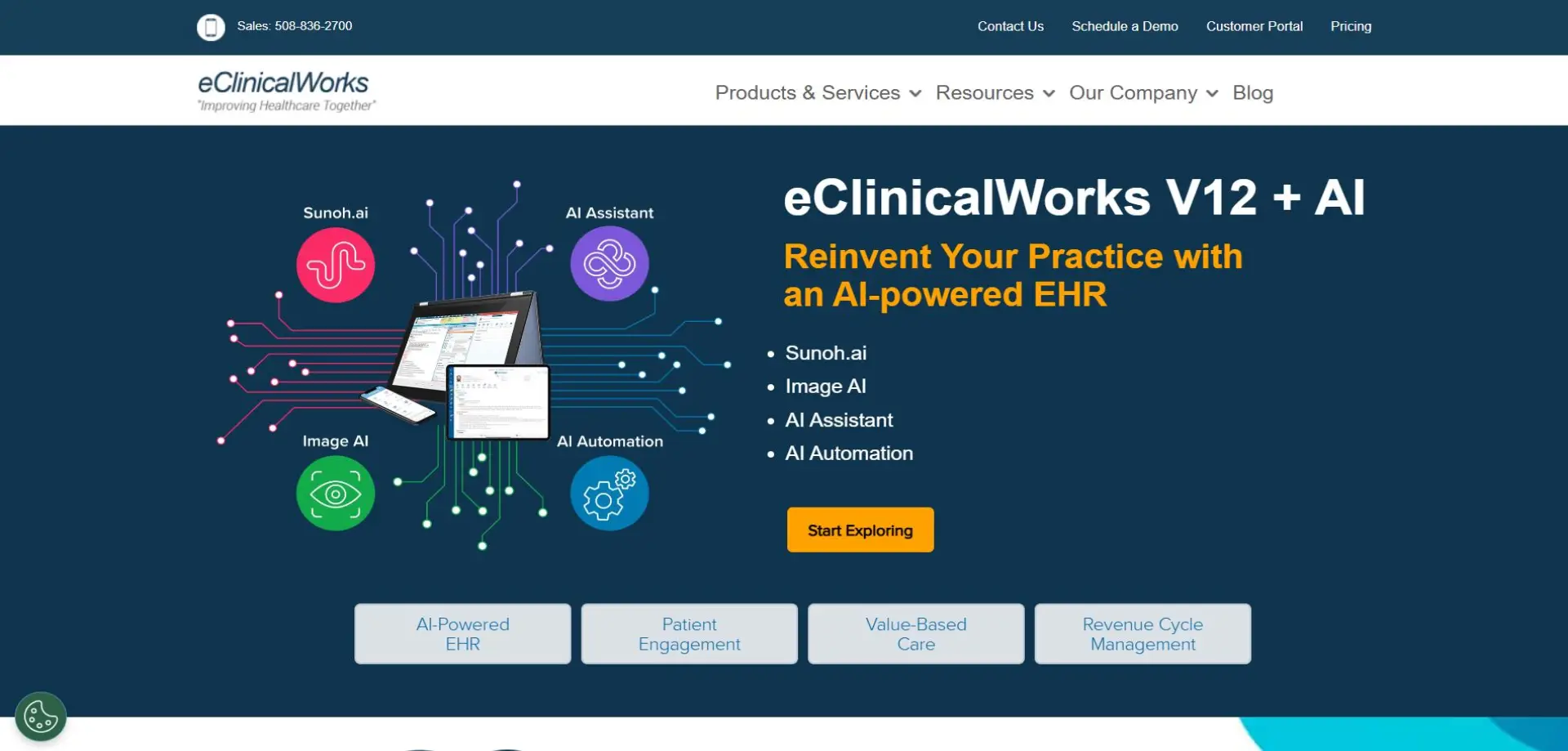
eClinicalWorks offers a cloud-based RCM solution alongside its EHR platform. Its software supports automated claims scrubbing, payment posting, and denial management, helping organizations improve revenue collection and operational efficiency.
8. R1 RCM

R1 RCM combines technology-enabled tools with managed services to provide full-cycle revenue management. Its platform focuses on claims resolution, denial management, and operational transformation for hospitals and physician groups.
9. Experian Health

Experian Health specializes in payer identity, eligibility verification, and patient financial engagement. Its platform reduces administrative burden and improves access to critical payer data to optimize collections.
10. AGS Health
AGS Health offers a range of RCM technology and services, including accounts receivable management, denial resolution, and patient engagement. Its solutions are designed for mid-sized to enterprise healthcare organizations seeking reliable RCM support.
Benefits of RCM Systems
Adopting a modern RCM system in 2026 offers compelling advantages as healthcare continues to shift toward digital-first, value-oriented financial models. Here are some of the most important benefits to consider:
Faster cash flow and reduced denials
By automating claims submission, eligibility verification, and denial tracking, an RCM system can significantly reduce claim rejections and denials. This leads to faster reimbursement and improves days in AR, helping organizations stabilize their cash flow.
Increased staff productivity
RCM software takes over repetitive, time-consuming tasks (such as claims scrubbing and manual follow-up), freeing up your team to focus on strategic work. This boosts morale and efficiency, while also letting you reallocate resources to other critical functions.
Better financial visibility
Modern RCM platforms provide real-time analytics and dashboards that give leadership detailed insight into key performance indicators like clean claim rates, denial root causes, and payment trends. These actionable insights help inform decisions and guide process improvements.
Enhanced patient financial experience
With features such as self-service billing portals, cost estimation, and automated patient reminders, RCM systems make the payment experience smoother for patients. This transparency can drive patient satisfaction and reduce collection friction.
Key Features of RCM Systems
To deliver the benefits above, the top RCM systems offer the following core features:
Comprehensive charge capture
A strong RCM system ensures all clinical services are accurately captured and coded, reducing revenue leakage and making sure billing aligns with clinical documentation.
Claims management and scrubbing
Platforms provide automated editing, scrubbing, and prioritization of claims to improve first-pass success. This reduces the workload on billing teams and accelerates reimbursement.
Denial management tools
Claim denials are a major pain point for healthcare providers. The best RCM software gives you mechanisms to categorize denials, automate appeal workflows, and identify systemic issues driving rejections.
Analytics and reporting dashboards
Visualization tools and reports help you track financial KPIs, uncover trends, and benchmark performance, enabling tracked improvement across your revenue cycle.
Integration with clinical and front-end systems
High-performing RCM systems seamlessly integrate with EHRs, practice management software, and payer interfaces, enabling smooth data flow across registration, billing, and follow-up.
What to Consider When Purchasing RCM Systems
Choosing the right RCM system is not just about picking features. It's about finding a solution that aligns with your organization’s strategy, capacity, and goals. Here are some key things to consider:
Scalability and growth
Assess whether the system can grow with your organization: handling increased volume, more payers, and expanded services. A scalable RCM platform will save you from painful migrations further down the line.
Compliance, security, and data protection
Ensure the software is compliant with healthcare data regulations (e.g., HIPAA) and delivers robust security protections. Patient data is inherently sensitive, and your RCM partner must treat it accordingly.
User experience and adoption
The system should be intuitive and user-friendly. Your staff will use it every day, so accessibility really matters for widespread adoption and efficiency across your organization.
Vendor support and implementation
Look into the level of customer success, training, and onboarding support offered by the vendor. A reliable implementation partner will make a significant difference during the rollout process.
Total cost of ownership and ROI
Consider all costs: software license or subscription, implementation, training, and ongoing maintenance. Weigh them against expected efficiency gains, revenue improvements, and reduced denials to calculate your return on investment.
Why Invest in an RCM System Now
Investing in a next-generation RCM system is no longer optional. Todays, healthcare organizations that modernize their revenue cycle operations will be better positioned to navigate payer complexity, reduce financial risk, and improve operational resilience. Whether you manage a hospital system looking for deep integration or an ambulatory practice aiming to automate tedious workflows, the right RCM solution can accelerate collections, reduce denials, and deliver real-time financial insights.
By choosing a modern platform like Aptarro, organizations can gain a comprehensive, data-driven system designed to optimize revenue performance while simplifying day-to-day operations. Its analytics and automation capabilities make it easier to monitor performance, uncover trends, and proactively address challenges across the revenue cycle.
If you’re ready to see how Aptarro can transform your revenue cycle, book a demo today. It could be the first step toward a stronger, more efficient financial future.