

Healthcare claims processing has never been more challenging. Between evolving payer requirements, shifting regulatory standards, and the sheer volume of claims flowing through health systems and physician practices, mistakes in coding or billing documentation can slip through even the most experienced hands. Every denied or delayed claim represents lost revenue, administrative burden, and potential compliance risks. In this complex environment, claims auditing has emerged as a crucial safeguard, helping providers catch errors before submission, avoid denials, and protect their bottom line.
Yet manual auditing is often laborious, time-consuming, and prone to human error. That’s why many organizations are turning to claims auditing software: tools that bring automation, consistency, and scalability to the auditing process. With the right software, practices can proactively scrub claims, streamline workflows, and dramatically reduce revenue leakage.
Below is our curated list of the Top 10 Claims Auditing Software for 2026 – consider this your guide to understanding what’s available and choosing what best fits your organization’s needs.
Top 10 claims auditing software for 2026
1. Aptarro
2. Healthicity
3. AGS Health
4. Waystar
5. Epic Systems
6. R1 RCM
9. MEDITECH
10. The SSI Group
What Is Claims Auditing?
Before diving into software, it helps to understand the concept of claims auditing itself: what it involves, why it matters, and when it’s used. Claims auditing refers to the systematic review and verification of healthcare claims (billing, coding, and documentation) to ensure accuracy, completeness, compliance with payer and regulatory rules, and proper reimbursement.
Here is a quick breakdown of the core aspects of claims auditing:
| Term | Definition |
| Claims auditing | The systematic process of examining insurance or medical claims to verify that codes, modifiers, documentation, and formatting comply with payer requirements and regulatory standards. |
| Audit objectives | Detect coding or billing errors, identify missing or insufficient documentation, ensure compliance with payer-specific and regulatory rules, prevent improper payments, and maximize correct reimbursement. |
| Common audit triggers | Pre-submission quality assurance, retrospective audits, denial analysis, periodic compliance checks, or as part of internal quality improvement programs. |
This auditing process acts as a vital checkpoint in the revenue cycle. By carefully reviewing claims before or after submission, organizations can catch simple mistakes (such as miscoded procedures or missing modifiers), as well as complex compliance issues (such as documentation gaps or payer-specific requirements). In essence, claims auditing helps to safeguard revenue, reduce denials, and maintain operational integrity.
Because of the volume and complexity of modern claims (especially in large practices, hospitals, or multi-specialty groups), manual auditing quickly becomes impractical. That leads us to the role of claims auditing software.
What Is Claims Auditing Software?
Claims auditing software refers to digital platforms designed to automate, streamline, and standardize the auditing process. Rather than relying solely on manual review, these tools apply payer and regulatory logic, code‑set validation, and documentation checks to claims data. This often happens before submission, and sometimes as part of retrospective review or quality assurance.
Here is a comparison between traditional manual auditing and what auditing software delivers:
| Category | Manual auditing process | What auditing software provides/automates |
| Code validation | Human review of each claim’s codes, modifiers, and documentation | Automated code‑set validation and payer‑rule checks across large volumes of claims |
| Compliance checks | Manual cross‑checking of payer and regulatory rules (which may change frequently) | Continuously updated rule libraries and edit sets reflecting current payer and compliance requirements |
| Workflow efficiency | High staff workload, delays, subjective variability | High‑volume processing, exception‑based workflows (only flagged claims require manual intervention), consistent and objective audits |
| Audit timing | Retrospective audits or spot checks only | Pre‑submission “scrubbing,” real-time feedback to coders/billers, analytics, and audit trails for compliance |
By automating much of the grunt work (code validation, rule application, documentation checks), auditing software allows organizations to scale their auditing efforts, reduce human error, and standardize compliance. Rather than treating auditing as a bottleneck or periodic hassle, software enables it to become an integrated, efficient part of the revenue cycle.
In short, while claims auditing is the broader process and discipline, auditing software is the tool that empowers organizations to perform that process consistently, at scale, and with greater reliability.
Top 10 Claims Auditing Software for 2026
1. Aptarro
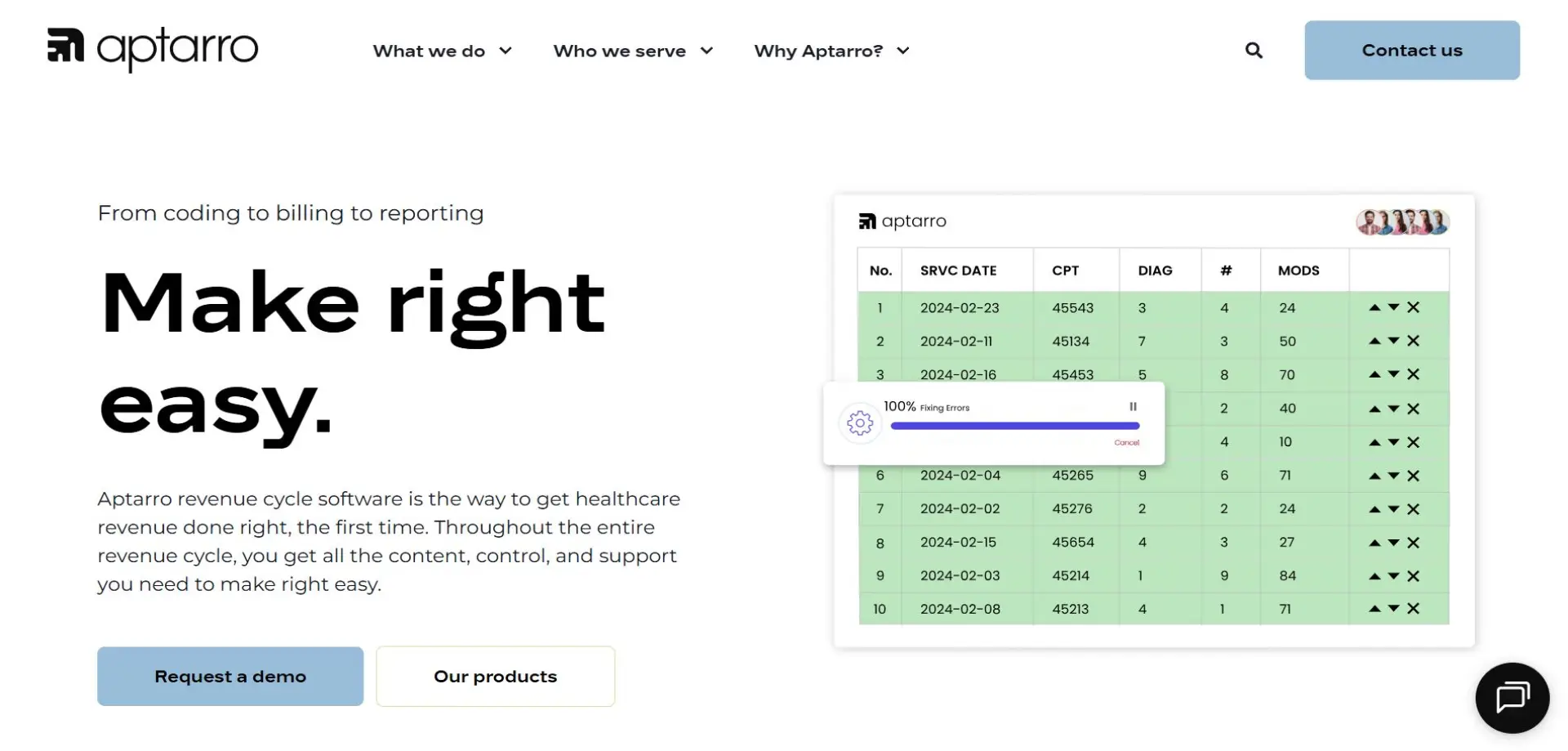
Aptarro is a leading, comprehensive claims auditing and revenue cycle management solution trusted by healthcare organizations of all sizes. Its platform is designed to support the entire claims process, helping providers maintain accuracy, improve compliance, and optimize revenue. By centralizing auditing and review workflows, Aptarro allows organizations to manage claims more efficiently, reduce denials, and maintain consistency across multiple payers and specialties.
At the heart of Aptarro’s solution is the RevCycle Engine, which provides tools to help organizations streamline their auditing and claims review processes. The platform is built to be flexible and scalable, supporting practices in improving oversight, gaining insights into claim trends, and maintaining alignment with regulatory and payer requirements — all without disrupting existing workflows.
For healthcare organizations seeking a reliable, integrated solution to enhance revenue cycle operations and support cleaner claims processing, Aptarro delivers a robust, scalable platform. To explore how Aptarro can help your organization improve claim management and revenue integrity, book a demo today.
2. Healthicity
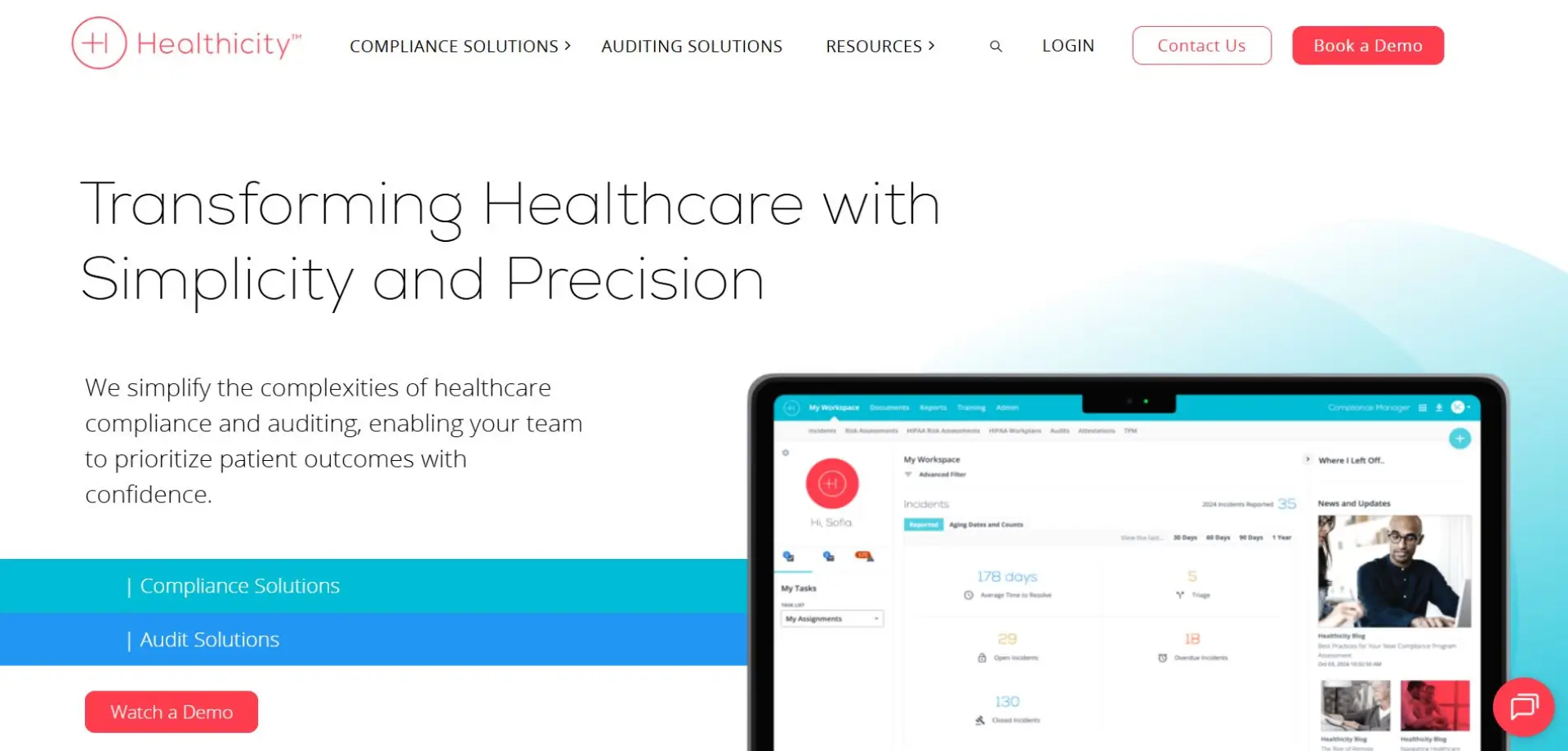
Healthicity offers a robust, web‑based auditing platform designed primarily for retrospective reviews and quality assurance workflows. The software allows internal auditors or coding compliance teams to review submitted claims, assess coding accuracy, and track billing consistency across coders and providers.
3. AGS Health
The auditing module within AGS Health’s AI-driven platform offers healthcare providers an easy way to apply data-driven logic to their claims audits. It offers case selection filters, detailed audit reports, and a structured approach to compliance review, making it suitable for organizations that want to combine automated analysis with human auditor oversight.
4. Waystar

Waystar, widely known for revenue cycle management and claims processing, includes components that support claim validation, error detection, and auditing workflows. While it is a broader Revenue Cycle Management (RCM) suite, the auditing features embedded within Waystar make it a viable option for organizations seeking both claims submission capabilities and audit‑ready workflows within a unified system.
5. Epic Systems
Epic Systems combines clinical documentation, coding, billing, and claims management in a single ecosystem, helping organizations streamline workflows and maintain consistency. With its enterprise-grade architecture, Epic enables healthcare providers to manage revenue cycle and claims operations with confidence.
6. R1 RCM

R1 RCM provides end-to-end revenue cycle management services that help healthcare organizations streamline claims processing, billing workflows, and overall financial operations. By integrating clinical and administrative revenue functions, R1 RCM supports organizations in achieving more efficient and accurate claims management.
7. Oracle Health
Oracle Health provides integrated revenue cycle and claims management solutions that help healthcare organizations streamline billing, improve accuracy, and enhance operational efficiency. Healthcare systems looking for a robust, scalable platform can rely on Oracle Health to optimize claims workflows and revenue capture.
8. Experian Health

Experian Health offers claims management, clearinghouse services, and revenue cycle support that help organizations process claims accurately and gain visibility into performance trends. For organizations aiming to reduce errors and enhance operational insight, Experian Health delivers a dependable solution for claims and revenue cycle management.
9. MEDITECH
MEDITECH combines patient accounting, billing, and claims management into an integrated system that supports hospital and health system operations. Hospitals and health systems seeking a unified clinical and financial platform turn to MEDITECH to streamline processes and maximize revenue.
10. The SSI Group
The SSI Group provides hospital revenue cycle and patient accounting solutions designed to streamline claims, billing, and financial operations. Organizations that need a flexible yet reliable solution often choose The SSI Group to maintain consistent and efficient revenue cycle operations.
Benefits of Claims Auditing Software
Adopting claims auditing software can transform how organizations manage their billing and reimbursement workflows, delivering tangible improvements in revenue, compliance, and operational efficiency. Here are the details.
Improve revenue capture and accuracy
With automated validation, auditing software helps ensure that claims submitted are “clean”, meaning they have correct codes, modifiers, and documentation. This significantly reduces the rate of denials or rejections, leading to faster reimbursements and fewer write‑offs.
Ensure compliance and reduce regulatory risk
Payer rules and regulatory requirements often change on short notice. Auditing software, with regularly updated rule libraries, helps ensure that claims adhere to the latest standards, reducing the risk of compliance issues, audits, or penalties.
Reduce administrative workload and boost staff productivity
By automating repetitive, error‑prone tasks like code checking and rule application, auditing software frees up staff time. Teams can then focus on exceptions, complex cases, and other high-value activities instead of tedious manual reviews.
Key Features of Claims Auditing Software
When evaluating software, certain capabilities tend to distinguish the most effective tools from basic ones. These are the features that deliver real value and scalability.
Automation and AI‑driven validation
Modern auditing platforms apply automated code‑set validation, payer‑rule logic, and error detection across large claim volumes. In some tools, AI‑driven analytics help flag unusual patterns or high-risk claims for deeper review, making auditing proactive rather than reactive. This automation reduces manual workload and helps maintain consistency as claim volumes grow.
Integration with EHR/PM/RCM systems
The most useful auditing solutions integrate seamlessly with existing Electronic Health Record (EHR), Practice Management (PM), or broader Revenue Cycle Management (RCM) systems. This ensures that auditing becomes part of the regular workflow without requiring disruptive manual exports or data transfers.
Reporting, analytics, and audit‑trail capabilities
A robust auditing tool offers dashboards, customizable reports on denial trends, coding performance, audit findings, and an end-to-end audit trail. These analytics help leadership identify recurring issues, monitor improvement over time, and ensure compliance, providing visibility and control over the revenue cycle.
What to Consider When Purchasing Claims Auditing Software
Before committing to a solution, organizations should weigh several factors to ensure the tool aligns with their workflows, volume, and long‑term goals.
Ease of implementation and scalability
A solution should integrate smoothly with existing systems and workflows. It should also be capable of scaling alongside your practice or facility, whether you’re processing a few dozen claims a day or thousands. A tool that’s difficult to implement or doesn’t scale easily may create friction rather than streamline operations.
Support, maintenance, and content updates
Because payer and regulatory rules evolve frequently, the value of auditing software depends on timely updates to its edit libraries and rule sets. Reliable vendor support, ongoing maintenance, and the ability to tailor rules to your payer mix or specialties are essential to effective, long-term use.
Cost versus ROI and total cost of ownership
Consider not just upfront licensing or subscription fees, but also expected savings from reduced denials, improved cash flow, fewer reworks, and staff time reclaimed. Evaluate how quickly the software can pay for itself and whether it integrates efficiently enough to deliver a measurable return on investment.
Why Claims Auditing Software Matters Now
Claims auditing software has become more than a convenience. It’s increasingly essential in modern healthcare revenue management. In an era of complex payer rules, high reimbursement scrutiny, and increasing claim volume, the risk of manual errors is simply too great.
Auditing software elevates claims processing from a fallback, manual safety net into an integrated, scalable, and proactive revenue integrity practice. For providers looking to safeguard revenue, reduce denials, ensure compliance, and streamline workflows, investing in the right auditing tool can have a transformative impact.
If you want to move from reactive claim corrections to proactive, clean‑claim workflows with fewer denials and more reliable reimbursements, now is the time to explore solutions. Book a demo with Aptarro to see them for yourself.