

As healthcare organizations face increasing patient volumes, complex documentation, and growing regulatory demands, manual medical coding has become a bottleneck in the revenue cycle. The process of reviewing clinical notes, translating them into standardized codes, and ensuring compliance with payer rules can be labor-intensive, error-prone, and slow.
Automation medical coding software has emerged as a transformative solution, helping organizations streamline workflows, improve accuracy, and accelerate reimbursement.
For 2026, the market for automation medical coding software includes a mix of well-established solutions and newer AI-powered platforms. These tools differ in terms of scalability, integration with electronic health records (EHRs), and the extent of automation offered. The following guide highlights the top 10 solutions, providing a snapshot of each to help healthcare organizations make informed decisions.
Top 10 automation medical coding software for 2026
1. Aptarro
2. Solventum
3. Optum
4. CodaMetrix
5. Sully.ai
7. XpertDox
8. AGS Health
10. Reteta
What Is Automation Medical Coding?
Automation medical coding streamlines or replaces aspects of the manual coding process. Traditional coding involves human coders reviewing documentation and assigning codes related to International Classification of Diseases (ICD), Current Procedural Terminology (CPT), and Healthcare Common Procedure Coding System (HCPCS). This can be time-consuming and susceptible to errors. Automation aims to reduce manual effort while improving accuracy and consistency.
The table below provides a concise overview of key concepts related to automation medical coding:
| Term | Definition |
| Medical coding | Transforming clinical documentation into standardized codes used for billing, reporting, and compliance. |
| Automation medical coding | Using software, often AI-enabled, to suggest or assign codes based on clinical documentation, reducing manual labor. |
| Computer-assisted coding (CAC) | A system that provides suggested codes for human review, streamlining coder workflows. |
| Autonomous coding | Advanced systems that can process coding tasks with minimal human intervention, depending on accuracy and compliance thresholds. |
Automation medical coding is focused primarily on the coding process itself, aiming to reduce errors, improve efficiency, and ensure consistency across different coders and departments. By minimizing repetitive tasks, organizations can increase throughput and reduce delays in the billing cycle.
What Is Automation Medical Coding Software?
While automation medical coding describes the process, automation medical coding software refers to the tools that make this process possible. These systems integrate with clinical and administrative workflows to provide code suggestions, manage updates to coding standards, and support compliance. They act as a bridge between raw clinical documentation and billing systems, helping organizations streamline revenue cycle management.
Automation in medical coding leverages advanced technologies such as artificial intelligence and natural language processing (NLP) to interpret clinical documentation and assist coders in assigning appropriate codes. These tools range from computer-assisted coding (CAC) solutions, which propose codes for human review, to more advanced systems that aim to handle large portions of coding autonomously. By automating routine tasks, healthcare providers can focus on higher-value work while improving the efficiency and consistency of their revenue cycle.
The table below highlights how automation medical coding software supports healthcare organizations:
| Purpose | How it Works |
| Ingest documentation | Software connects with EHRs or other document sources to process clinical notes and reports. |
| Suggest or assign codes | Based on documentation, the system proposes or assigns appropriate standardized codes for billing. |
| Support compliance | Maintains alignment with coding standards, payer rules, and regulatory requirements. |
| Provide analytics | Offers insights into coding accuracy, productivity, and revenue cycle performance. |
| Streamline workflows | Integrates with billing and revenue management systems to accelerate claim processing. |
Automation medical coding software brings consistency, efficiency, and scalability to coding workflows. By combining documentation interpretation with integration into billing systems, these tools help healthcare organizations reduce errors, save time, and improve financial outcomes.
Top 10 Automation Medical Coding Software for 2026
1. Aptarro
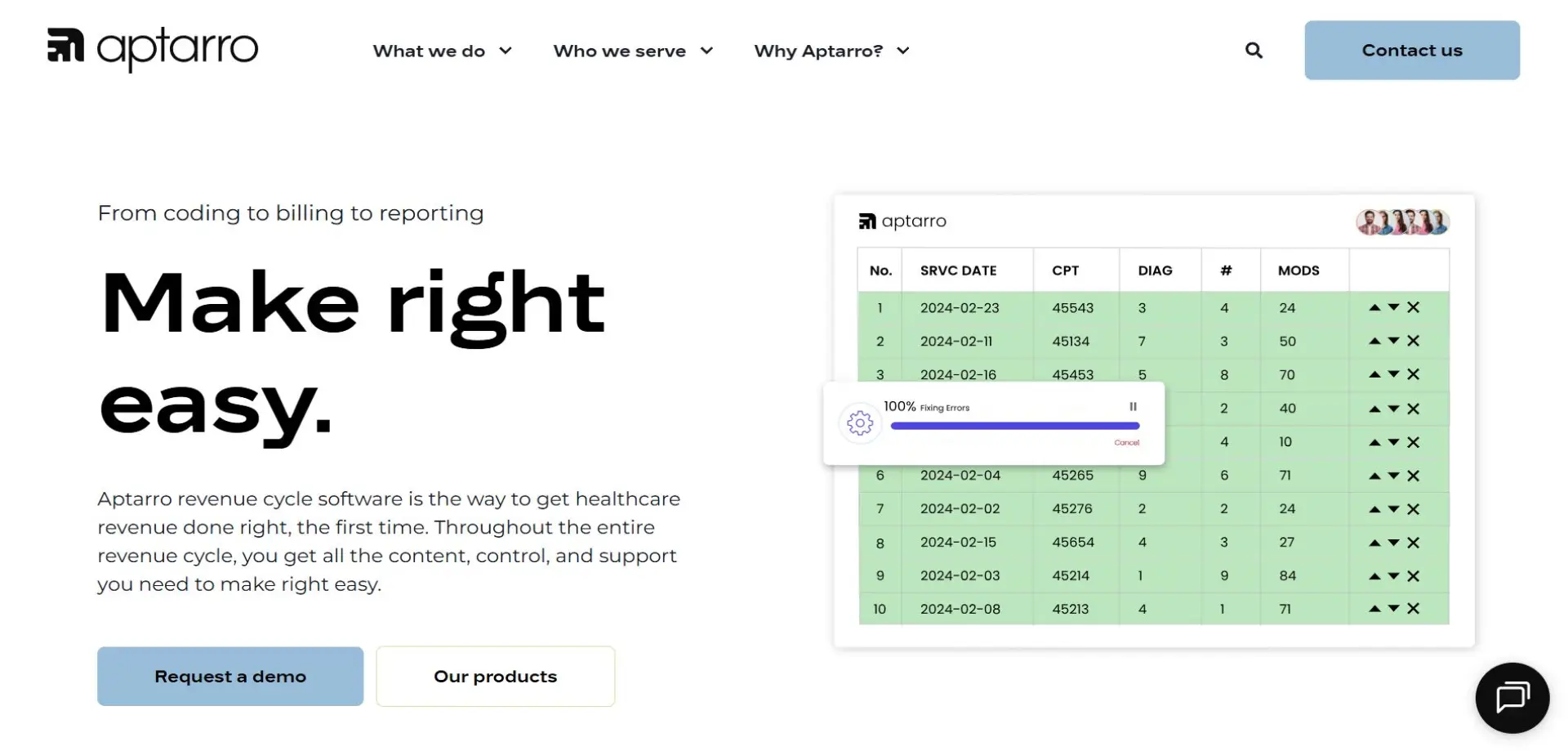
Aptarro’s RevCycle Engine stands out as a leading automation medical coding solution. Designed for healthcare organizations of all sizes, it integrates with clinical and billing workflows to provide a comprehensive approach to coding. The platform leverages intelligent processing to assist with code assignment while supporting revenue cycle operations, ensuring that organizations can handle coding efficiently and with greater consistency.
RevCycle Engine offers organizations the ability to monitor coding performance and revenue trends, providing actionable insights for administrators and coding managers. It supports integration across multiple systems, allowing coders and administrators to work in one unified environment. The software is scalable and adaptable, making it suitable for hospitals, clinics, and revenue cycle management companies seeking reliable, automated coding solutions.
By combining automation with analytical insights, Aptarro helps organizations reduce manual workload, maintain consistent coding standards, and streamline their revenue cycle processes. For healthcare teams looking to enhance coding efficiency while preserving compliance, RevCycle Engine provides a robust and practical solution. See it in action: book a demo with Aptarro today.
2. Solventum

Solventum provides technology designed to support medical coding teams by helping them review clinical documentation more efficiently. Its tools are built to integrate smoothly into existing workflows, offering a structured environment that promotes consistency and supports accurate coding across healthcare settings.
3. Optum
Optum offers automated coding support for outpatient and specialty practices. The software helps coders navigate coding standards efficiently, providing guidance while integrating with billing workflows.
4. CodaMetrix
CodaMetrix provides context-aware coding support for high-volume environments. Its AI-driven platform helps organizations manage coding tasks with consistency and efficiency while reducing reliance on manual processes.
5. Sully.ai
Sully.ai delivers AI-powered coding solutions designed to integrate seamlessly with existing EHRs. It supports scalable automation that can adapt to different organizational needs, from medium-sized clinics to large hospital systems.
6. Fathom Health
Fathom Health offers a platform aimed at automating large portions of the coding process. Its system helps organizations manage coding volume efficiently while maintaining accuracy and compliance standards.
7. XpertDox
XpertDox provides AI-assisted coding and reporting capabilities. It helps organizations streamline coding workflows while offering insights into coding productivity and accuracy.
8. AGS Health
The AGS Health AI Platform focuses on professional coding across multiple specialties. The platform supports code suggestions and validation within a structured workflow, aiming to improve consistency and efficiency.
9. Syllo Solutions
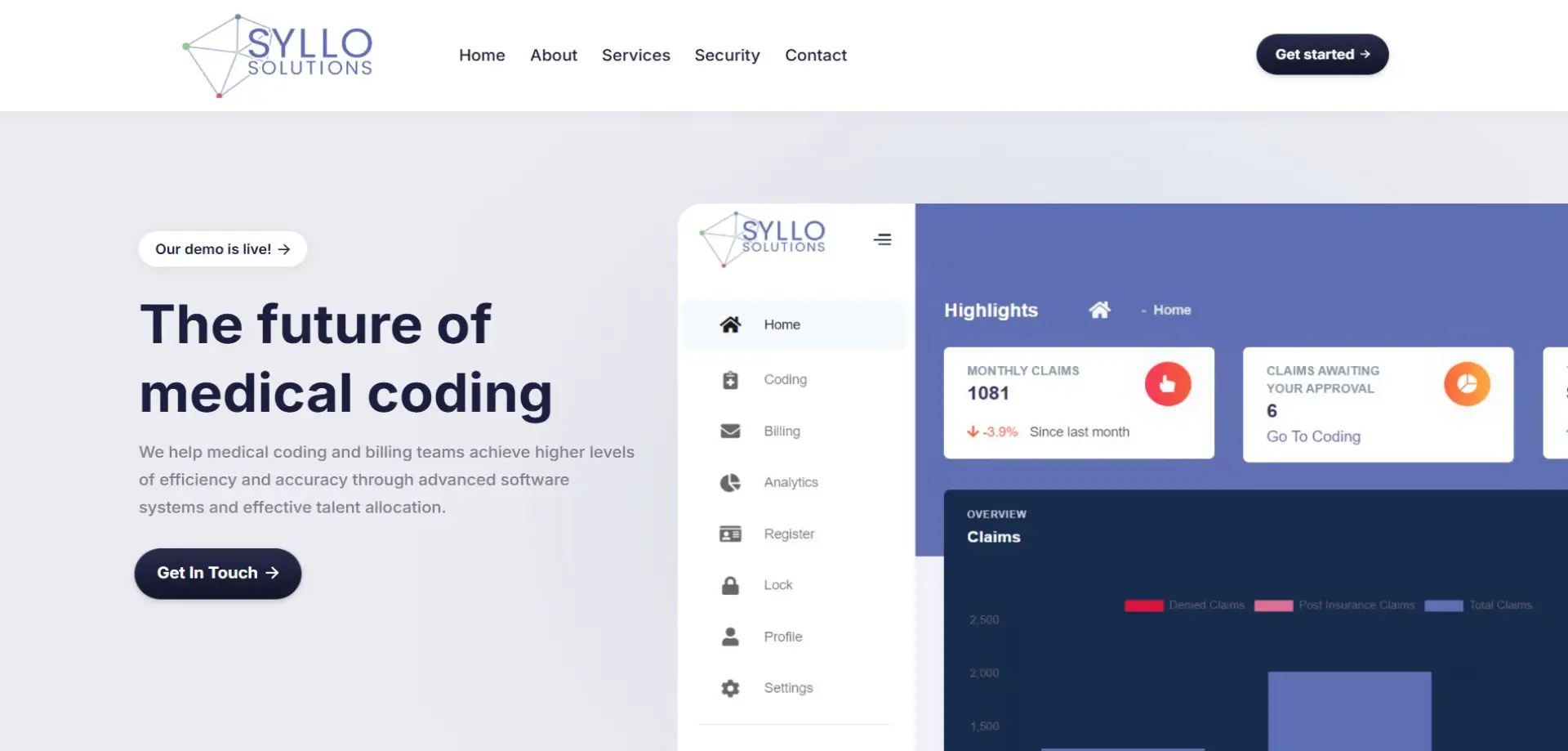
Syllo Solutions offers coding automation with a focus on enterprise-level integration. Its platform helps reduce manual workload while supporting oversight and auditing capabilities.
10. Reteta
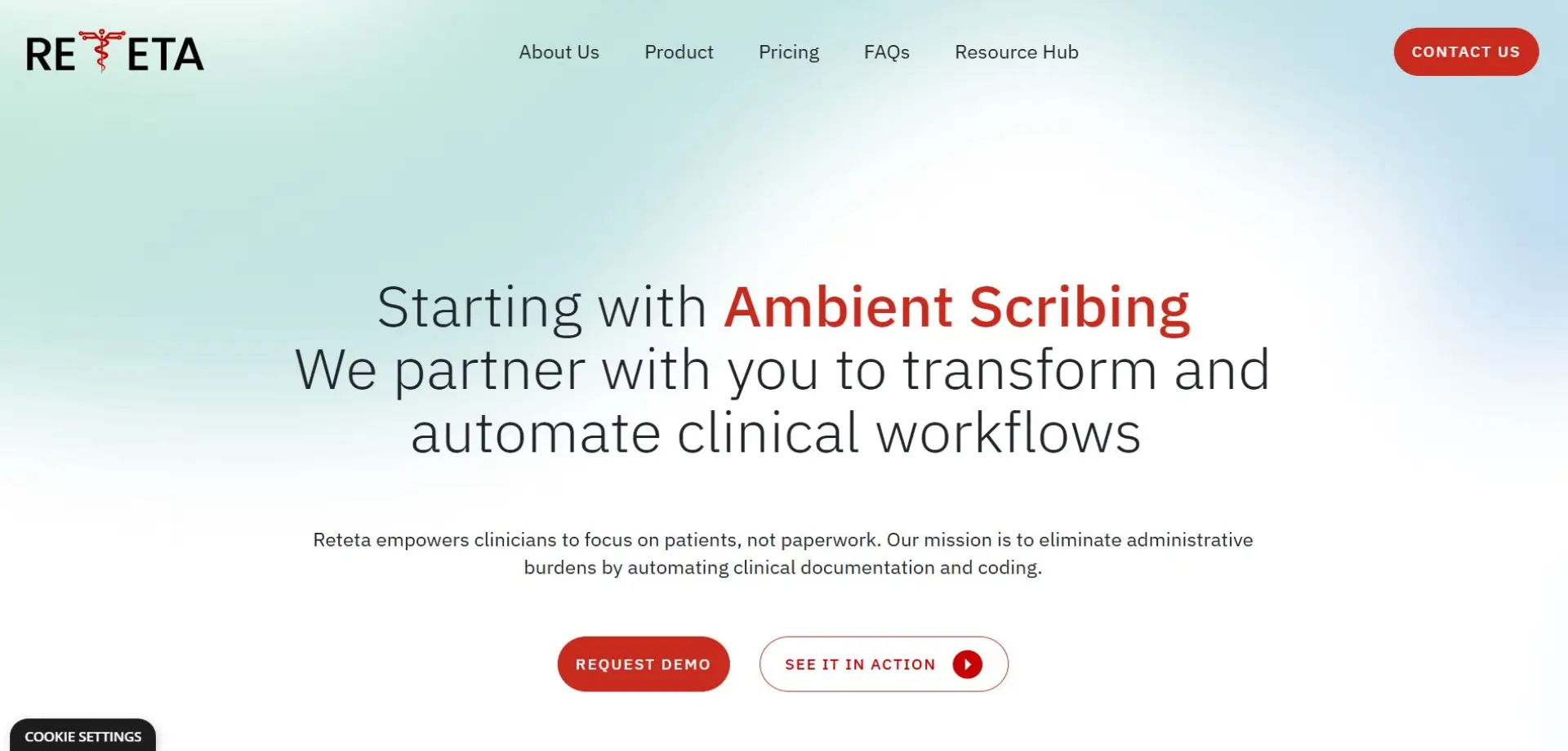
Reteta leverages AI to provide automated coding support with an emphasis on transparency and audit readiness. The platform is designed to help organizations maintain coding accuracy while streamlining revenue cycle operations.
Benefits of Automation Medical Coding Software
Automation medical coding software offers several advantages that can help organizations improve efficiency and financial performance.
Increased coding efficiency and throughput: Automated systems reduce the time spent on manual coding tasks, allowing coders to process higher volumes of charts in less time.
Improved accuracy and reduced denials: By leveraging AI and consistent coding standards, automated tools help minimize errors and reduce the risk of claim denials.
Enhanced compliance and standardization: Automation ensures that coding adheres to current guidelines and payer rules, promoting consistent practices across coders and departments.
Insights through analytics and reporting: Many platforms provide dashboards that allow organizations to monitor coding performance, productivity, and revenue cycle outcomes.
Key Features of Automation Medical Coding Software
Automation medical coding platforms typically include certain key capabilities that drive efficiency and consistency.
AI/NLP-assisted coding: Modern platforms use AI and NLP to analyze documentation and suggest or assign appropriate codes.
Seamless EHR and workflow integration: Integration with clinical and billing systems allows coding to occur within existing workflows without duplicating effort.
Compliance validation and audit support: Software includes checks for regulatory compliance and maintains audit trails for transparency and accountability.
Analytics and performance dashboards: Organizations gain insights into coding trends, productivity, and financial outcomes through integrated reporting tools.
What to Consider When Purchasing Automation Medical Coding Software
Selecting the right automation tool requires attention to several key factors.
Accuracy and specialty coverage: Ensure the software supports the code sets and specialties relevant to your organization, providing reliable suggestions or assignments.
Integration with existing systems: Verify compatibility with EHRs and revenue cycle management systems to streamline workflows.
Compliance and audit readiness: Choose a solution that stays updated with regulatory changes and maintains transparent audit trails.
Scalability and ROI: Assess the platform’s ability to handle growing volumes and provide a return on investment through efficiency gains and reduced errors.
Human oversight and workflow adaptation: Even automated systems require some human validation; consider how the software will fit into your team’s workflow and oversight processes.
Why Choose Aptarro for Automation Medical Coding
Automation medical coding is transforming how healthcare organizations manage their revenue cycle. Aptarro’s RevCycle Engine provides a comprehensive, scalable solution that helps organizations reduce manual workload, maintain consistent coding practices, and improve revenue cycle efficiency.
Its integration with clinical and billing workflows, combined with actionable analytics, allows healthcare providers to streamline operations while enhancing coding quality.
Take the next step: book a demo with Aptarro to explore how RevCycle Engine can optimize your coding processes and strengthen your revenue cycle.