

The healthcare industry is evolving at a rapid pace, and one area seeing particularly strong transformation is medical coding. With increasing documentation demands, rising volumes of patient encounters, and growing pressure on revenue cycle teams to accelerate claim submission and minimize denials, many providers are turning to automated medical coding solutions. These systems help reduce manual burden, streamline workflows, and bring a level of consistency and efficiency that manual coding alone often struggles to match.
As technology advances, particularly in artificial intelligence (AI), natural language processing (NLP), and computer-assisted coding (CAC), today’s automated coding platforms are far more capable than their predecessors. They can ingest clinical documentation from a variety of sources (notes, discharge summaries, procedure reports), rapidly analyze content, and assist in code assignment and validation. For institutions of all sizes, from small clinics to large multi-specialty hospitals, these tools offer a compelling path to improve throughput, reduce errors, and better manage the revenue cycle.
Below you’ll find a curated list of 10 leading automated medical coding software solutions for 2026, each with unique strengths to suit different practice types and needs.
Top 10 automated medical coding software for 2026
1. Aptarro
2. CodaMetrix
4. Optum
5. TruBridge
6. Dolbey
7. Epic Systems
9. AdvancedMD
10. GeBBS
What is Automated Medical Coding?
Automated medical coding is a technology-driven process that interprets clinical documentation and transforms it into codes that can be processed for billing and reporting purposes. Often powered by AI, natural language processing (NLP), or rule‑based computer‑assisted coding (CAC) engines, it is used to assist (or replace) manual code assignment.
Instead of relying entirely on human coders poring over each chart line by line, automated systems analyze the text and context of clinical notes (such as physician progress notes, discharge summaries, operative reports, etc.) and generate a set of suggested codes.
This approach aims to accelerate coding workflows, reduce the risk of human error or oversight, enhance consistency in code assignment across coders, and support faster claim submission. It shifts coding from a purely manual and labor‑intensive task into a hybrid (or even fully automated) workflow, ideally with human oversight for quality assurance and complex cases.
To clarify key terms often associated with automated coding, here’s a quick reference table:
| Key Term | Meaning / Role in Automated Coding |
| ICD‑10/PCS | Standard diagnosis and procedure codes used in medical billing |
| CPT/HCPCS | Codes for services, procedures, and supplies |
| AI/NLP/CAC | Artificial intelligence, natural language processing, and computer-assisted technologies that interpret clinical text and suggest appropriate codes |
| EHR Integration | The capability to interface with electronic health record (EHR) systems for seamless data flow |
| Compliance and audit logic | Built‑in logic to validate codes, enforce payer rules, and support clean claims |
Automated medical coding is not a one-size-fits-all magic bullet, but used properly, it can significantly enhance coding efficiency and consistency, especially for high-volume practices or institutions aiming to reduce backlog and improve claim turnaround time.
What is Automated Medical Coding Software?
While “automated medical coding” describes the process or practice, “automated medical coding software” refers to the actual applications or platforms. In other words, the tools that bring automation to life. These software solutions are designed to interpret clinical documentation, propose appropriate billing codes, validate for compliance, and often integrate directly with EHR, billing, or revenue cycle systems.
Automated coding software typically offers a variety of functionalities beyond just code suggestion. Depending on the vendor and edition, features may include compliance checks, code validation, built-in payer edits, audit trails, reporting dashboards, and workflow management tools. In many cases, the software is cloud-based or delivered as a modular component that plugs into existing health‑IT infrastructure.
Below is a reference table summarizing the core functions and capabilities you can expect from such software:
| Function | Capabilities |
| Code assignment | Suggests or assigns diagnosis and procedure codes from clinical documentation |
| Validation and compliance checks | Verifies code correctness, checks for bundling/unbundling issues, and ensures modifiers and payer rules are respected |
| Integration with EHR/billing | Moves coded data seamlessly from documentation to billing/claims systems without duplicate manual entry |
| Audit readiness and reporting | Keeps audit logs, supports compliance audits, and provides analytics on coding quality and revenue trends |
| Workflow efficiency | Automates repetitive tasks, supports batch processing, and enables distributed or remote coding teams |
Modern automated coding software enables organizations to offload repetitive tasks from human coders, reduce manual data entry errors, and improve throughput, all while preserving oversight for complex or ambiguous cases.
Top 10 Automated Medical Coding Software for 2026
1. Aptarro
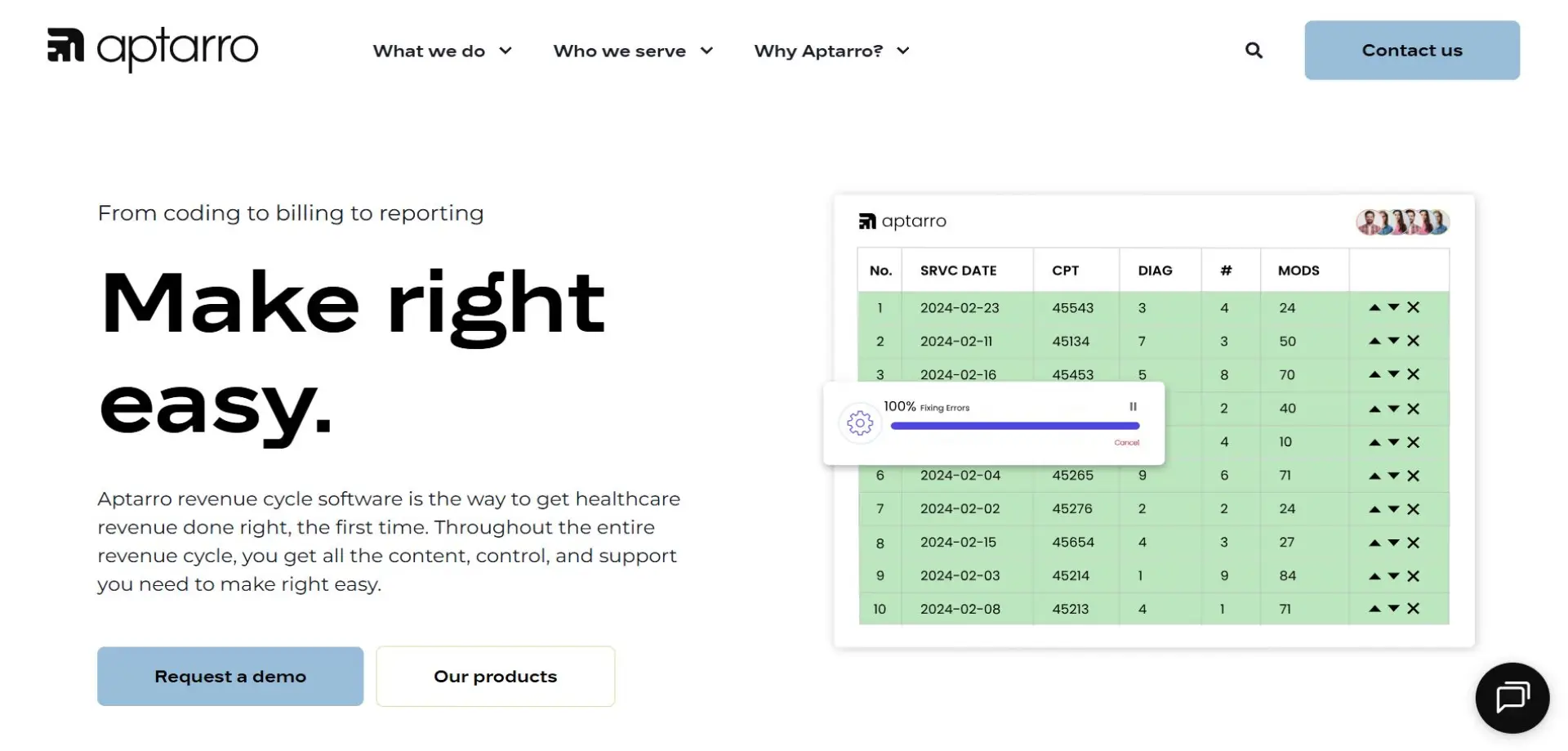
The Aptarro RevCycle Engine stands out as one of the most comprehensive and mature platforms in the automated coding space. Built with a modern architecture, it leverages advanced coding logic to assist organizations in assigning diagnosis and procedure codes, validating submissions, and maintaining compliance readiness. Because the system is regularly updated to reflect changes in code sets and payer requirements, it helps minimize coding errors and reduce the risk of denial or reimbursement delays.
Beyond code assignment, RevCycle Engine offers robust analytics and reporting tools that enable organizations to monitor coding accuracy, revenue trends, and compliance over time. This helps leadership and revenue‑cycle management teams identify bottlenecks, track performance, and make data-driven decisions. For institutions looking to overhaul their coding workflow, whether to reduce backlog, improve first-pass resolution, or scale operations, RevCycle Engine often serves as a reliable, end-to-end solution.
Many organizations adopt Aptarro as the backbone of their coding and RCM infrastructure because it delivers both automation and transparency: human coders can review and override suggested codes, ensuring quality control, while auditors and compliance officers benefit from documented trails and regular updates. For healthcare entities ready to modernize, Aptarro offers a strong foundation for sustainable and scalable coding operations in 2026 and beyond. Book a demo today.
2. CodaMetrix
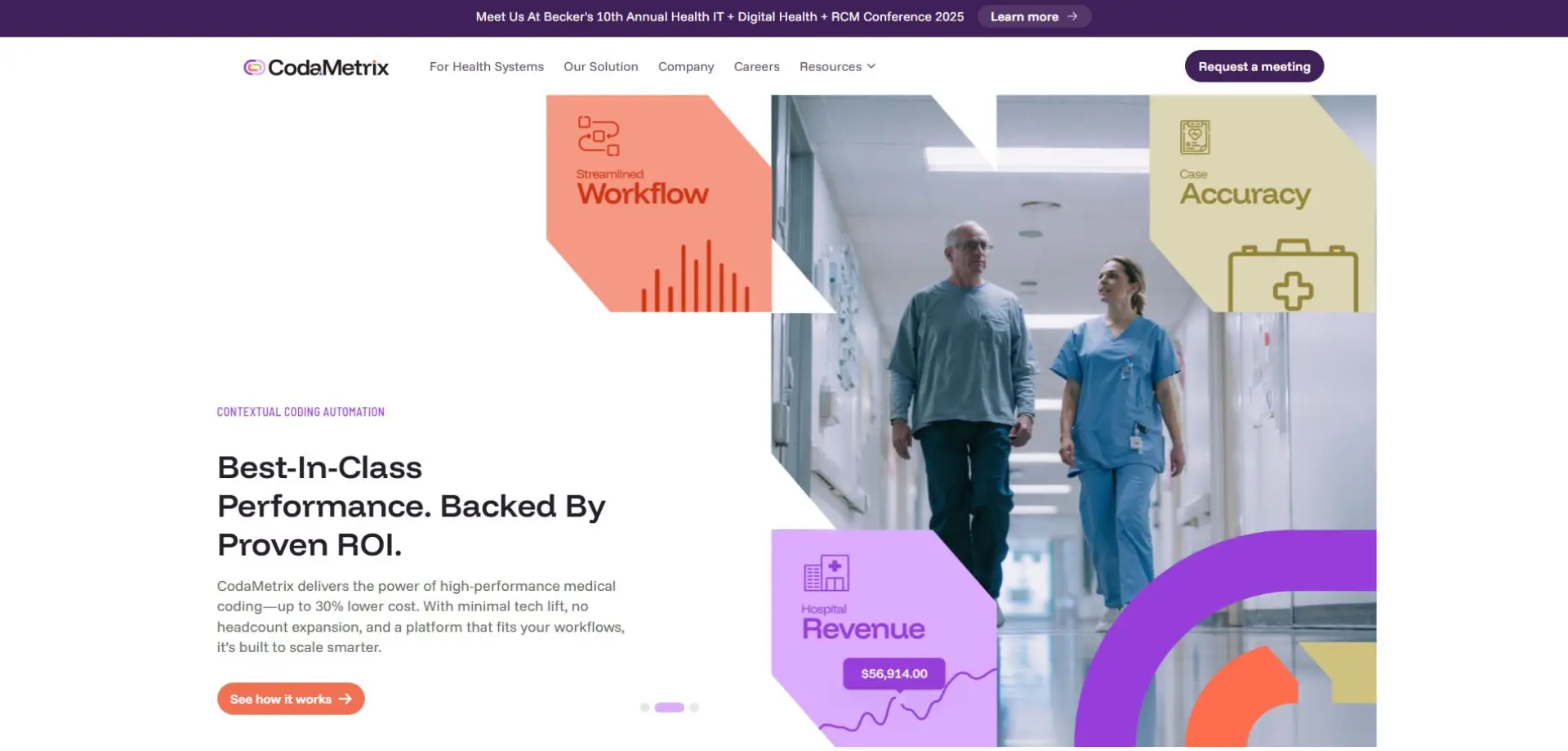
CodaMetrix uses natural language processing and machine learning to process clinical documentation and generate appropriate codes (diagnosis, procedure, and service codes). It aims to reduce manual workload and improve consistency across coders, particularly in high‑volume hospital environments. Many large health systems leverage CodaMetrix to standardize coding practices across departments and specialties.
3. RapidClaims AI
RapidClaims AI delivers a coding automation engine capable of handling both outpatient and inpatient documentation. It is designed to support high throughput, ideal for busy practices, billing companies, or health systems aiming to accelerate claim turnaround. The platform emphasizes efficiency and throughput without compromising baseline compliance checks.
4. Optum
Optum is a cloud‑based solution popular among ambulatory care facilities, physician offices, and billing services. It offers real-time code lookup capabilities, regular updates for code sets and payer rules, and a familiar interface for coders. This makes it a dependable choice for practices that need reliable, easy-to-adopt tools.
5. TruBridge

From outpatient visits to inpatient procedures, TruBridge supports a wide range of coding needs and is often praised for its real-time validation and diagnosis-related group (DRG) logic support. Its interface is intuitive and coder-friendly, helping reduce training overhead for institutions transitioning from manual processes.
6. Dolbey

Dolbey combines automated coding suggestions with documentation workflows, especially beneficial in settings where dictation or voice-to-text documentation is common. This hybrid approach helps coders by merging documentation and coding workflows, potentially reducing duplication of effort and accelerating overall turnaround.
7. Epic Systems
Epic Systems offers coding automation that is tightly integrated into clinical workflows. With documentation and coding operating within the same ecosystem, organizations experience less friction, fewer system handoffs, and a more streamlined process. It is therefore ideal for multi-specialty hospitals and health systems seeking minimal disruption.
8. Oracle Health
Oracle Health’s coding module adds automation within the Oracle Health EHR ecosystem. It supports both inpatient and outpatient settings and centralizes coding, documentation, and billing workflows, helping to improve consistency and reduce administrative burden.
9. AdvancedMD
AdvancedMD offers a modular, cloud-based coding solution suited for small to medium-sized practices, ambulatory clinics, or telehealth providers. Because it does not require heavy infrastructure, it is an accessible option for growing practices that need coding support without large upfront investments.
10. GeBBS

GeBBS is designed as a flexible cloud-based coding platform, combining automated coding engines with traditional coding logic. It supports multi-specialty workflows, offers custom reporting, and includes quality‑control features, making it a solid option for organizations handling diverse case mixes and seeking to consolidate coding across departments.
Benefits of Automated Medical Coding Software
Adopting automated coding software can bring multiple advantages, from operational efficiency to financial improvement. Key benefits typically include the following:
Increased coding speed and productivity
By automating the initial code assignment and pre‑validation, coding teams can process far more charts in less time compared to manual coding alone. This faster throughput helps reduce backlog, accelerate claim submission, and improve revenue cycle flow.
Improved coding accuracy and fewer denials
Automated systems apply consistent logic and up-to-date code sets, reducing the risk of human error, incorrect modifiers, or outdated codes. This, in turn, lowers the chance of claim denials or rework, helping safeguard revenue integrity.
Better compliance and audit readiness
Because many platforms regularly update to reflect the latest coding guidelines and payer rules, and maintain detailed audit logs, organizations are better equipped to stay compliant and prepared for audits, reducing risk and enhancing quality control.
Streamlined workflows and integration
When you connect automated coding software to your electronic records and billing systems, it cuts down on the tedious manual data entry work. It also minimizes handoffs between departments and simplifies coordination, leading to more efficient, smoother workflows across clinical, coding, and billing teams.
Key Features of Automated Medical Coding Software
Good automated coding platforms offer several core features that differentiate them from manual coding processes. Below are features to look for when evaluating systems.
Intelligent code suggestion and assignment
Using AI, NLP, or rule‑based engines, automated medical coding software analyzes clinical documentation and proposes potential codes. In the process, coders save significant time that would otherwise be spent searching code sets or reviewing notes line by line.
Real‑time validation and compliance checks
Quality software includes built-in logic to validate suggested codes and check for bundling or unbundling issues. It also recognizes necessary modifiers, applies payer-specific rules, and ensures that documentation properly supports coding decisions. These features help teams avoid common pitfalls like claim denials and audits.
Integration with EHR/RCM/billing systems
Seamless handoff from clinical documentation to billing or claims systems helps prevent redundant data entry, reduces errors, and streamlines the entire billing workflow, making the coding process more efficient and less error-prone.
Analytics, reporting, and audit trails
Dashboards and reports help organizations monitor coding accuracy, productivity, denial rates, and revenue performance. Audit trails document who made changes and when — crucial for compliance, quality assurance, and auditing purposes.
What to Consider When Purchasing Automated Medical Coding Software
Selecting the right software requires thoughtful evaluation. Several factors should guide decision-making to ensure the tool aligns with your organization’s needs.
Evaluate coding accuracy vs. case complexity
Different practices have different needs. If your case mix involves complex inpatient procedures, surgeries, or multi‑specialty care, make sure the software’s engine is robust enough to handle such complexity. For simpler outpatient clinics, a lighter-weight platform may be more appropriate. A mismatch could lead to under‑ or overcoding, or frequent manual overrides.
Ensure system compatibility and integration
If your practice already uses an EHR or revenue cycle management (RCM) system, the new coding software should integrate smoothly. Poor integration can negate efficiency gains, forcing manual data transfers, increasing duplication, or creating bottlenecks.
Regulatory compliance and timely updates
Since coding standards and payer rules evolve regularly, the software should receive frequent updates and maintain compliance logic. A platform that lags behind in updates or fails to support audit-ready documentation could expose your organization to revenue risk.
Consider scalability, support, and total cost of ownership
As your practice grows, whether in patient volume, providers, or specialties, check that the software is able to scale accordingly. Also weigh vendor support, training, licensing fees, implementation costs, and long-term maintenance to avoid surprises down the road.
Allow for human oversight and exception handling
Automated tools can streamline many tasks, but they can’t replace expert judgment in all cases. A good workflow includes human coders reviewing automated suggestions, especially for complex or ambiguous cases. Ensure the platform supports overrides, manual corrections, and audit logging for such exceptions.
Driving Accuracy and Efficiency in Healthcare Coding
Automated medical coding software represents a major shift in how healthcare organizations manage coding and billing workflows. By combining modern technology with structured coding logic, medical coding platforms can deliver faster throughput, greater consistency, fewer errors, and improved compliance, all of which contribute to healthier revenue cycles.
For organizations ready to transform their coding operations, exploring solutions such as Aptarro RevCycle Engine is a great first step. Scheduling a demo can help you evaluate how well the platform fits your case mix, workflow complexity, EHR infrastructure, and organizational goals.
Take the time to review your current coding processes, identify pain points, and map out your ideal workflow. With careful evaluation and implementation, automated coding software could become a cornerstone of efficient, compliant, and scalable revenue cycle management for 2026 and beyond.
Ready to modernize your coding workflows? Book a demo with Aptarro today.