

The healthcare industry is experiencing a profound transformation thanks to artificial intelligence. Among the areas seeing the most impact is medical coding: a critical process that converts clinical documentation into billing codes for insurance claims, reimbursements, and analytics.
Traditionally, medical coding has been a labor-intensive, error-prone task that requires highly trained staff and meticulous attention to detail. AI-powered medical coding is revolutionizing this workflow by automating code assignment, improving accuracy, and streamlining revenue cycle management.
With the rapid adoption of AI tools, healthcare organizations of all sizes are discovering the benefits of automating coding processes. AI in medical coding not only reduces human errors but also accelerates claim submission, improves compliance, and frees staff to focus on patient care and strategic initiatives.
In this article, we highlight the top 10 software examples that utilise AI in medical coding in 2026. These solutions represent a mix of enterprise-grade systems and more nimble tools designed for smaller practices. We also explore the benefits, key features, and purchasing considerations to help you identify the best AI-powered coding solution for your organization.
Top 10 AI in medical coding software for 2026
1. Aptarro
3. Sully.ai
4. Fathom
5. CodaMetrix
6. MediCodio
7. AdvancedMD
8. Nuance
9. Optum
10. DrChrono
What Is AI in Medical Coding?
AI in medical coding refers to the application of artificial intelligence technologies (including natural language processing (NLP), machine learning (ML), deep learning, and large language models) to automate the assignment of medical codes. Instead of relying solely on human coders, AI systems analyze clinical documentation, identify diagnoses, procedures, and modifiers, and suggest or assign the appropriate codes. This reduces errors, speeds up the coding process, and improves overall workflow efficiency.
AI in medical coding is the AI process itself (how coding is executed, accuracy is ensured, and data is prepared for billing and analytics). The table below summarizes the key concepts and terms related to AI in medical coding:
| Term | Definition |
| Medical coding | The process of converting clinical documentation (diagnoses, procedures, notes) into standardized codes (e.g., ICD, CPT, HCPCS) used for billing, insurance claims, and analytics. |
| AI in medical coding | The use of artificial intelligence to automatically read, understand, and code clinical documentation, while minimizing manual effort and errors. |
| Computer-assisted coding (CAC) | Rule-based or NLP-driven software that suggests codes, often still requiring human review. |
| AI-powered coding automation | Advanced systems that learn from prior data and adapt to documentation nuances to auto-code with minimal human intervention. |
By automating coding, healthcare organizations can ensure faster, more consistent, and more reliable coding outcomes. It also helps organizations keep pace with the increasing complexity of healthcare regulations and payer requirements, while reducing administrative burden.
What Is AI in Medical Coding Software?
AI in medical coding software applications are the platforms and tools that implement AI coding technology. These software solutions take clinical documentation, including notes, transcriptions, and EHR data, and process it using AI algorithms to suggest or assign codes.
AI coding software goes beyond mere automation; it can integrate with EHR systems and revenue cycle management platforms to ensure seamless workflows. These platforms may include analytics dashboards, audit trails, and compliance checks to help organizations maintain regulatory standards while improving coding efficiency.
Here are the core components and capabilities of AI in medical coding software:
| Concept | Explanation |
| Core functionality | Software ingests clinical documentation, processes it via AI, and outputs suggested or finalized billing codes. |
| Integration | Tools integrate with EHR and RCM platforms for smooth end-to-end workflows. |
| Automation & accuracy | AI reduces errors, speeds code assignment, and maintains audit trails. |
| Adaptation and learning | Many systems learn from human feedback to improve coding accuracy over time. |
AI in medical coding software is essentially the “engine” that makes AI-driven coding possible, providing healthcare organizations with a scalable, reliable, and intelligent solution for managing one of their most complex administrative tasks. Let's explore the top ten options for 2026.
Top 10 AI in Medical Coding Software for 2026
1. Aptarro
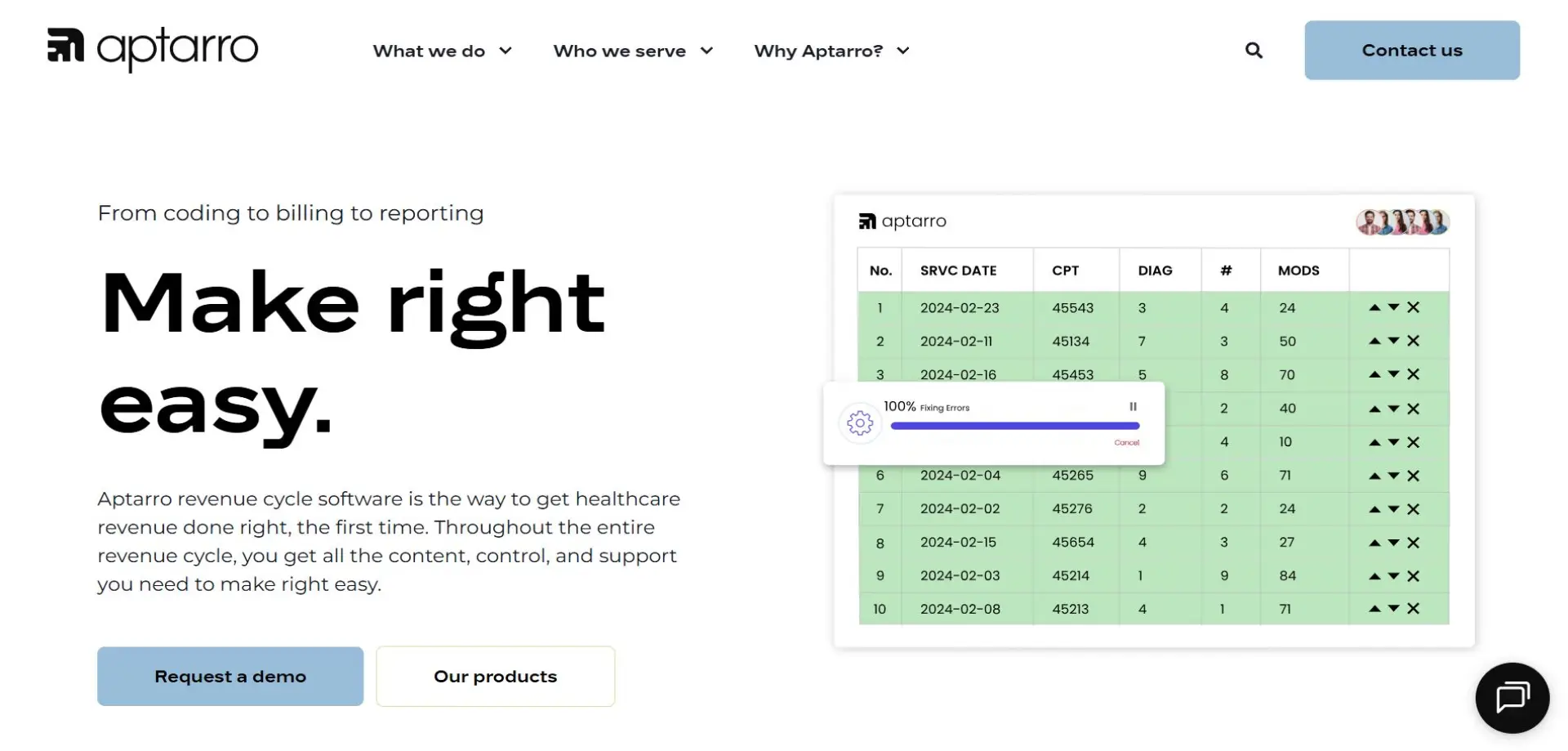
Aptarro stands out as a leading AI medical coding solution by combining extensive revenue cycle expertise with its powerful platform, RevCycle Engine. The software integrates seamlessly into clinical and administrative workflows, offering a unified approach to patient access, billing, claims management, and coding.
The RevCycle Engine leverages AI to support coding accuracy, optimize revenue, and streamline operational efficiency without overwhelming staff with manual data entry. While it automates many aspects of coding, it remains adaptable, ensuring healthcare organizations can maintain control over complex cases.
Because Aptarro is designed with end-to-end revenue cycle management in mind, it provides a robust foundation for healthcare organizations seeking a comprehensive, scalable solution. Its combination of automation, analytics, and insight makes it a top choice for hospitals, specialty practices, and multi-site operations.
Book a demo today to see how Aptarro’s RevCycle Engine can transform your medical coding workflow.
2. NextGen Healthcare

NextGen Healthcare provides an AI-enabled coding assistant that analyzes documentation, predicts potential claim denials, and suggests corrective actions. Its tools are well-suited for practices handling high volumes or complex claims.
3. Sully.ai
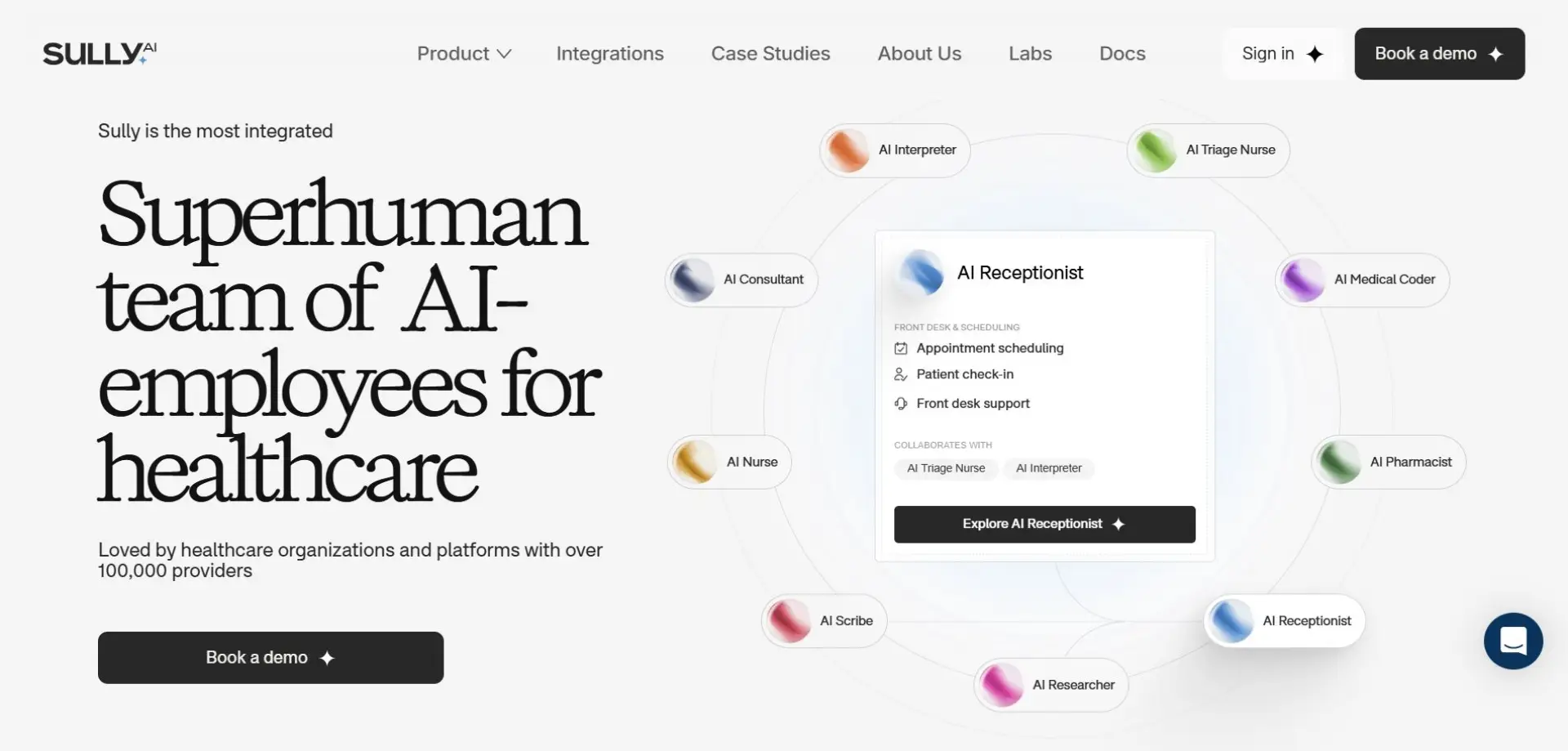
Sully.ai uses modular AI agents to analyze clinical documentation and automatically assign International Classification of Diseases (ICD) and Current Procedural Terminology (CPT) codes. Designed for accuracy and speed, it reduces manual editing while improving first-pass coding rates, making it a strong choice for high-volume practices.
4. Fathom
Fathom’s autonomous coding engine automates code assignment for large healthcare systems. It is designed to handle high volumes of charts across multiple specialties, providing fast, accurate coding with minimal human oversight.
5. CodaMetrix
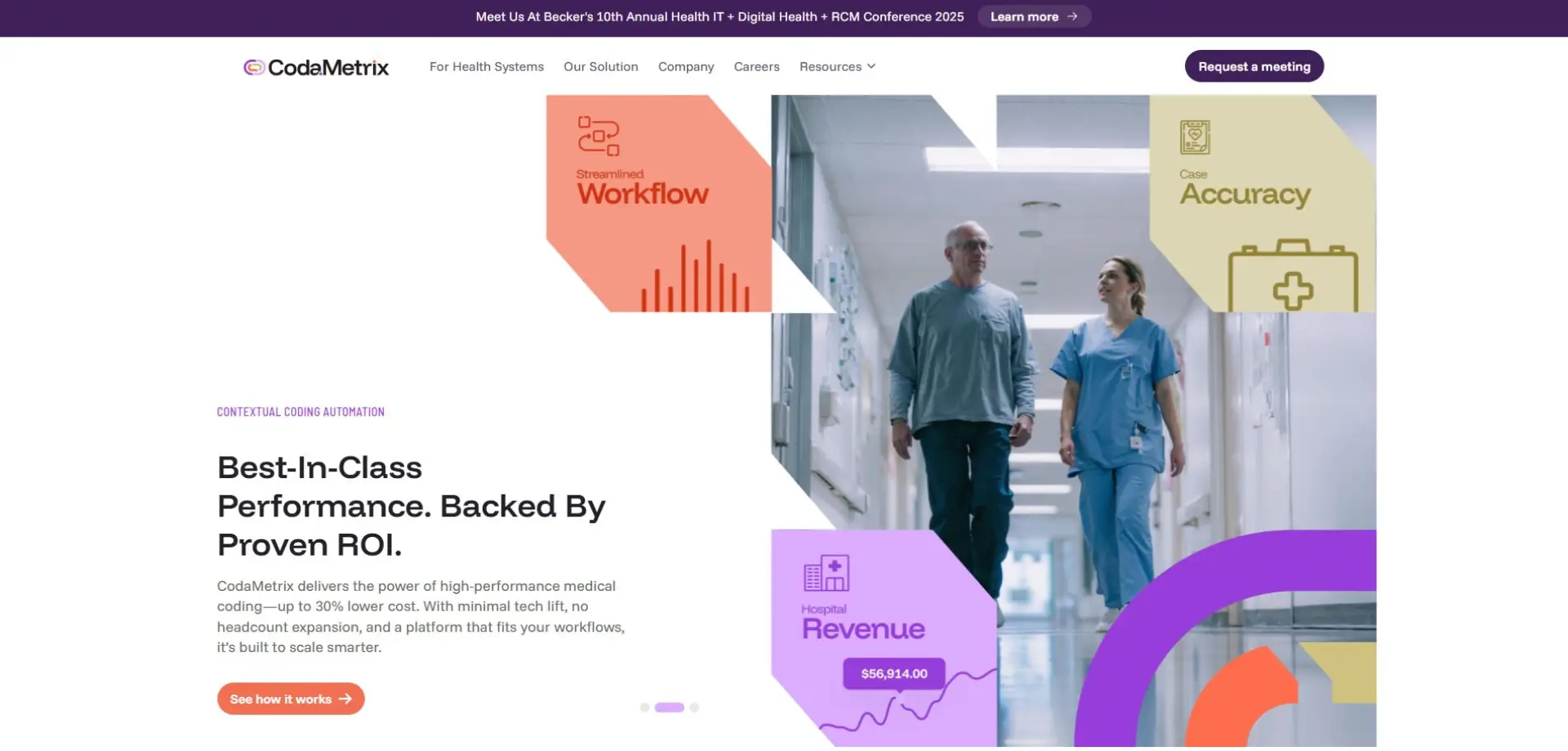
CodaMetrix focuses on contextual AI, aggregating data from multiple sources and continuously applying payer rules. It is used primarily in hospitals and large healthcare facilities to reduce manual coding costs and improve revenue capture.
6. MediCodio
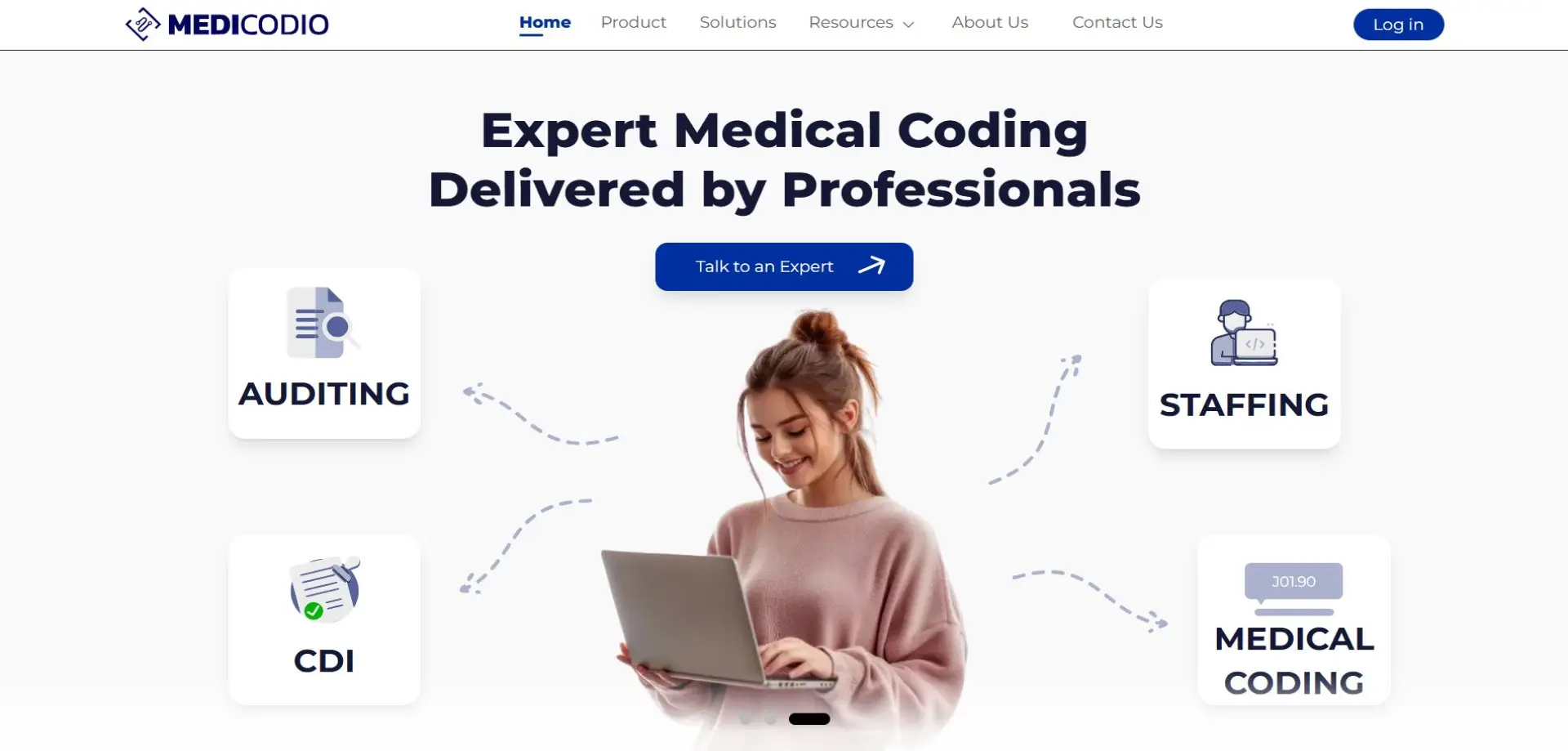
MediCodio combines Optical Character Recognition (OCR), robotic process automation, and AI to rapidly translate clinical documentation into billing codes. The platform improves throughput and reduces workload for coding teams, offering a practical solution for small to mid-sized practices.
7. AdvancedMD
AdvancedMD combines speech recognition and AI-assisted coding suggestions to support coders across hospitals and health systems. Its long-standing presence in the industry ensures reliability and comprehensive support.
8. Nuance
Nuance’s platform enhances clinical documentation and supports coding decisions in real-time, helping reduce errors and improve claim acceptance rates. It is particularly valuable for organizations focusing on compliance and accuracy.
9. Optum
Optum’s computer-assisted coding platform leverages AI to validate and recommend codes, often as part of a broader revenue cycle management suite. Its integration with analytics and risk-adjustment tools provides a comprehensive solution for enterprise healthcare organizations.
10. DrChrono
DrChrono combines EHR with AI-driven coding and billing tools, automating code assignment and eligibility checks. It is ideal for small to medium practices seeking an integrated, user-friendly solution.
Benefits of AI in Medical Coding Software
AI in medical coding software delivers tangible advantages for healthcare organizations. For example, by automating complex workflows and improving accuracy, it works to reduce administrative burden and accelerate revenue cycles.
Improved coding accuracy and consistency
AI-powered tools reduce human errors and maintain coding consistency, helping organizations submit claims that are more accurate and less likely to be denied.
Faster claims processing and improved cash flow
Automation accelerates code assignment and claim submission, shortening reimbursement cycles and boosting cash flow for healthcare providers.
Reduced administrative workload
By handling repetitive, labor-intensive coding tasks, AI allows staff to focus on higher-value activities, such as audits, compliance, and patient care.
Scalability for high-volume operations
AI systems can manage large volumes of documentation without the limitations of manual coding and the requirement of proportional increases in staffing.
Key Features of AI in Medical Coding Software
Modern AI coding software combines advanced technology with practical workflow enhancements, making coding faster, more accurate, and easier to manage.
NLP and AI-driven code suggestion
AI systems use natural language processing and machine learning to interpret unstructured clinical notes, accurately identifying diagnoses, procedures, and modifiers.
Integration with EHR and RCM systems
Seamless integration ensures coding fits smoothly into existing clinical and administrative workflows, avoiding bottlenecks and manual data transfer.
Compliance checks and audit trails
Built-in compliance logic and audit trails help organizations meet regulatory requirements while identifying potential claim errors or inconsistencies.
Continuous learning and adaptability
AI tools adapt over time based on feedback and changing coding guidelines, improving accuracy and performance across specialties.
What to Consider When Purchasing AI in Medical Coding Software
Selecting the right AI coding platform requires careful consideration of your organizational needs, workflow compatibility, and regulatory requirements.
Documentation complexity and coding volume
Consider the complexity of your cases and the volume of charts your organization handles to ensure the software supports your required code sets and can handle high-volume workflows efficiently.
Integration with existing systems
Evaluate how well the AI platform integrates with your EHR and revenue cycle management (RCM) systems to avoid workflow disruptions and maintain data integrity.
Compliance and audit requirements
Look for software with robust compliance checks, audit trails, and flexibility for human oversight, particularly in highly regulated environments.
Cost, scalability, and vendor support
Assess the total cost of ownership, including implementation, support, and training. Choose a vendor capable of scaling with your organization and providing updates aligned with evolving coding standards.
Transform Your Medical Coding Workflow with AI
AI in medical coding is revolutionizing the way healthcare organizations manage billing, compliance, and revenue cycles. From large hospital systems to specialty practices, AI-powered solutions streamline coding, reduce errors, and free staff to focus on patient care.
Aptarro, with its RevCycle Engine, offers a comprehensive platform that integrates coding, claims, and revenue cycle management into a single, scalable solution. By combining automation, analytics, and insight, Aptarro helps healthcare organizations optimize workflow, improve accuracy, and accelerate reimbursements.
Book a demo today to experience how Aptarro can transform your medical coding processes and take your revenue cycle to the next level.