

Managing medical claims has become a defining factor in how successfully healthcare organizations maintain financial stability. With rising administrative demands, evolving payer rules, and increasing scrutiny on documentation, clinics and hospitals are under pressure to submit accurate claims quickly and consistently. The right technology not only accelerates reimbursements but also minimizes operational strain, allowing providers to focus more on patient care rather than paperwork.
Medical claims software has therefore become essential infrastructure. In 2026, the best platforms are moving beyond simple billing tools, now incorporating workflow intelligence, integrated data environments, and dependable process automation.
Whether you’re a small practice aiming to simplify your daily operations or a multi-site organization seeking unified visibility across your revenue cycle, choosing the right software can significantly strengthen your financial performance. This list highlights the top 10 medical claims software solutions for 2026.
Top 10 medical claims software for 2026
1. Aptarro
2. NextGen
3. Athenahealth
4. AdvancedMD
5. Tebra
6. DrChrono
7. CareCloud
10. ModMed
What are Medical Claims?
A medical claim is the formal request for reimbursement that a provider submits to an insurance payer after delivering care to a patient. It contains key details such as patient information, diagnosis codes, procedure codes, and documentation related to the services provided. Without accurate claims, providers risk delayed payments, denied claims, or revenue loss.
Below is a quick overview of the primary components of medical claims:
| Term | Description |
| Medical claim | A request for payment from a healthcare provider to a payer for services delivered. |
| Claim submission | The act of sending standardized claim information to insurers for evaluation. |
| Claim adjudication | The payer’s internal process of reviewing, approving, denying, or adjusting the claim. |
| Denials/rejections | Instances where claims are not accepted due to missing data, coding issues, or coverage problems. |
| Follow-up/appeals | The steps taken to reconcile, correct, or resubmit a denied or rejected claim. |
Together, these elements form the financial backbone of healthcare operations. Properly managing medical claims is critical to preventing revenue leakage and ensuring that provider organizations can sustain their clinical services.
What Is Medical Claims Software?
While medical claims refer to payment requests, medical claims software is the technology that helps healthcare organizations manage those requests more efficiently. This type of software supports the administrative, financial, and compliance processes related to claims creation, submission, follow-up, and monitoring. It acts as a centralized system that enables smoother workflows between administrative staff, clinical records, payers, and financial teams.
Before we discuss the software in detail, here is an overview of what medical claims software typically supports:
| Function | What It Helps With |
| Claim submission and tracking | Organizing, preparing, and following claims from creation to resolution. |
| Claim scrubbing and data checks | Flagging missing or inconsistent information before submission. |
| Denial handling support | Identifying denials, organizing follow-up, and helping streamline resubmissions. |
| System integrations | Syncing with EHR, practice management, and scheduling platforms. |
| Reporting and financial visibility | Offering insights into payer trends, claims performance, and revenue cycle metrics. |
Medical claims software simplifies and strengthens the full workflow of claims management. Instead of relying on spreadsheets, manual checks, and scattered documentation, providers gain a coordinated environment where claims can be monitored, corrected, and submitted with more consistency and less effort.
Top 10 Medical Claims Software for 2026
Here are the top ten platforms for managing medical billing processes in 2026.
1. Aptarro
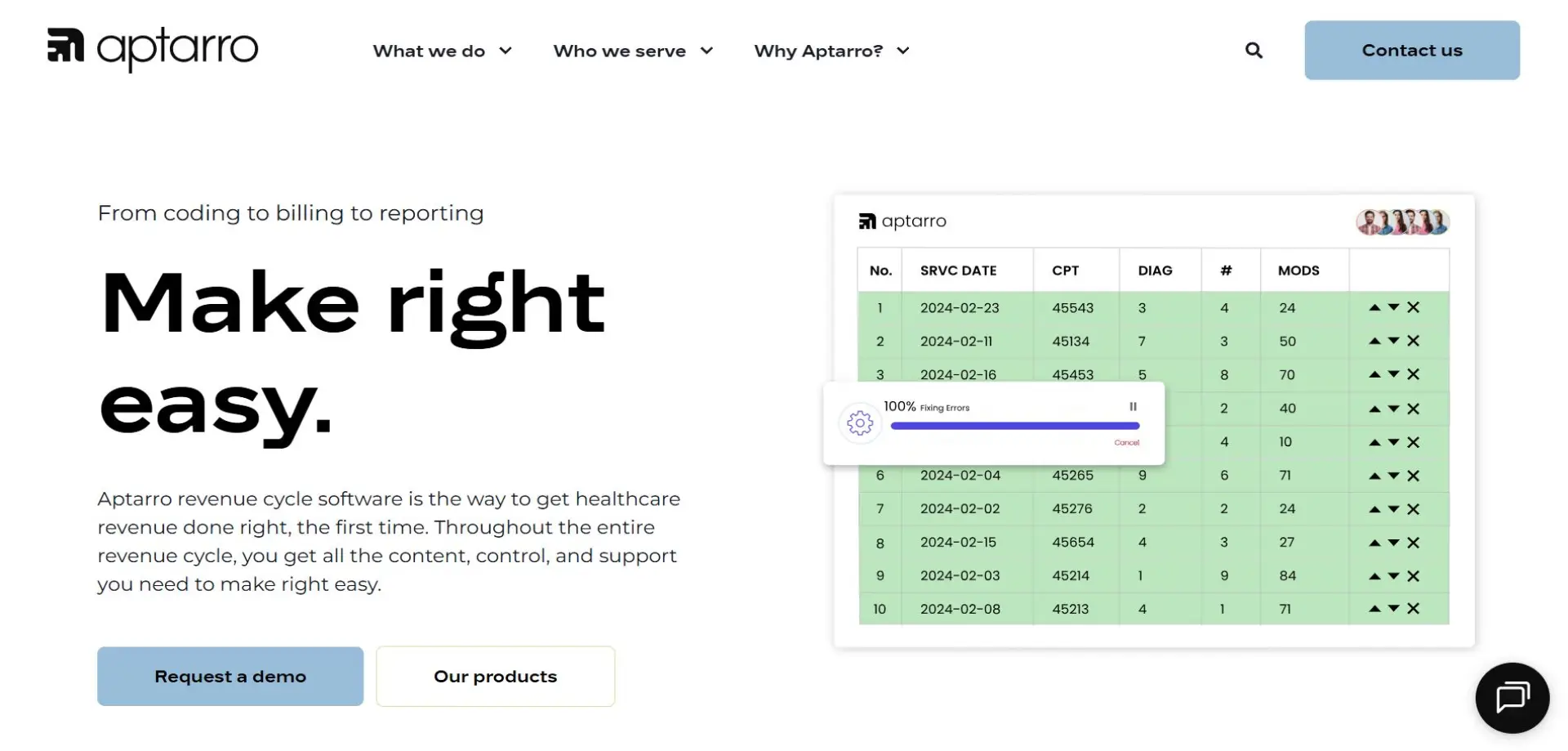
Aptarro leads this year’s list for its comprehensive and unified approach to claims processing. Its platform is designed to help healthcare organizations manage medical claims with greater stability, visibility, and consistency across the entire workflow, from the earliest creation of data to the final stages of claim resolution. By reducing the administrative friction that often slows down claims, Aptarro allows providers to maintain a more dependable revenue cycle.
At the center of the platform is Aptarro’s RevCycle Engine, a software environment built to support claim-related tasks through a structured, organized, and scalable framework. While the engine’s features vary depending on how organizations use it, it generally assists in streamlining workflows, strengthening visibility into claims, and supporting the overall claims lifecycle with consistent processes. This makes it suitable for practices of different sizes, whether handling a modest volume of claims or managing complex, multi-site operations.
What makes Aptarro stand out is its usability and adaptable workflows. Instead of overwhelming organizations with overly complex configurations, Aptarro focuses on providing a system that can support claims handling in a clear, organized manner. In 2026, it remains a standout choice for organizations seeking a dependable, all-in-one platform for medical claims management.
Request a demo to explore RevCycle Engine features for yourself.
2. NextGen
NextGen offers cloud-based billing and administrative capabilities suitable for organizations that need a mix of usability and structure. It supports claims processing as part of its broader healthcare technology ecosystem.
3. Athenahealth
Athenahealth offers a cloud-based environment that supports claim submission and billing workflows. Its system is designed for practices that want both an organized claims process and the benefit of a broader practice management platform.
4. AdvancedMD
AdvancedMD provides medical claims tools as part of its wider practice management and clinical suite. It is often chosen by larger clinics that prefer a more robust system capable of supporting multiple locations and workflows.
5. Tebra
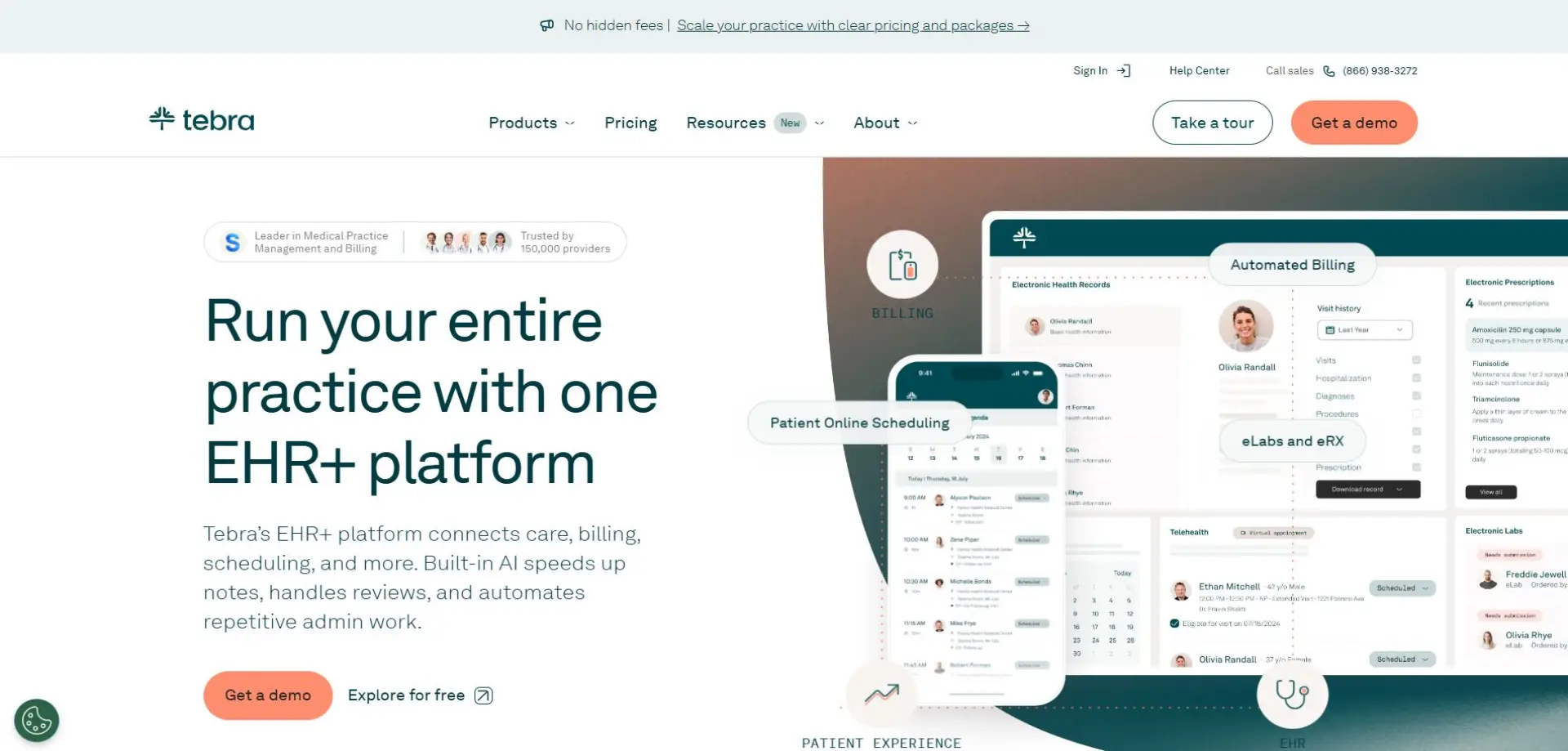
Tebra is widely used by small to mid-sized practices because of its intuitive interface and straightforward claims-handling processes. It supports common billing workflows without requiring complex system configurations.
6. DrChrono
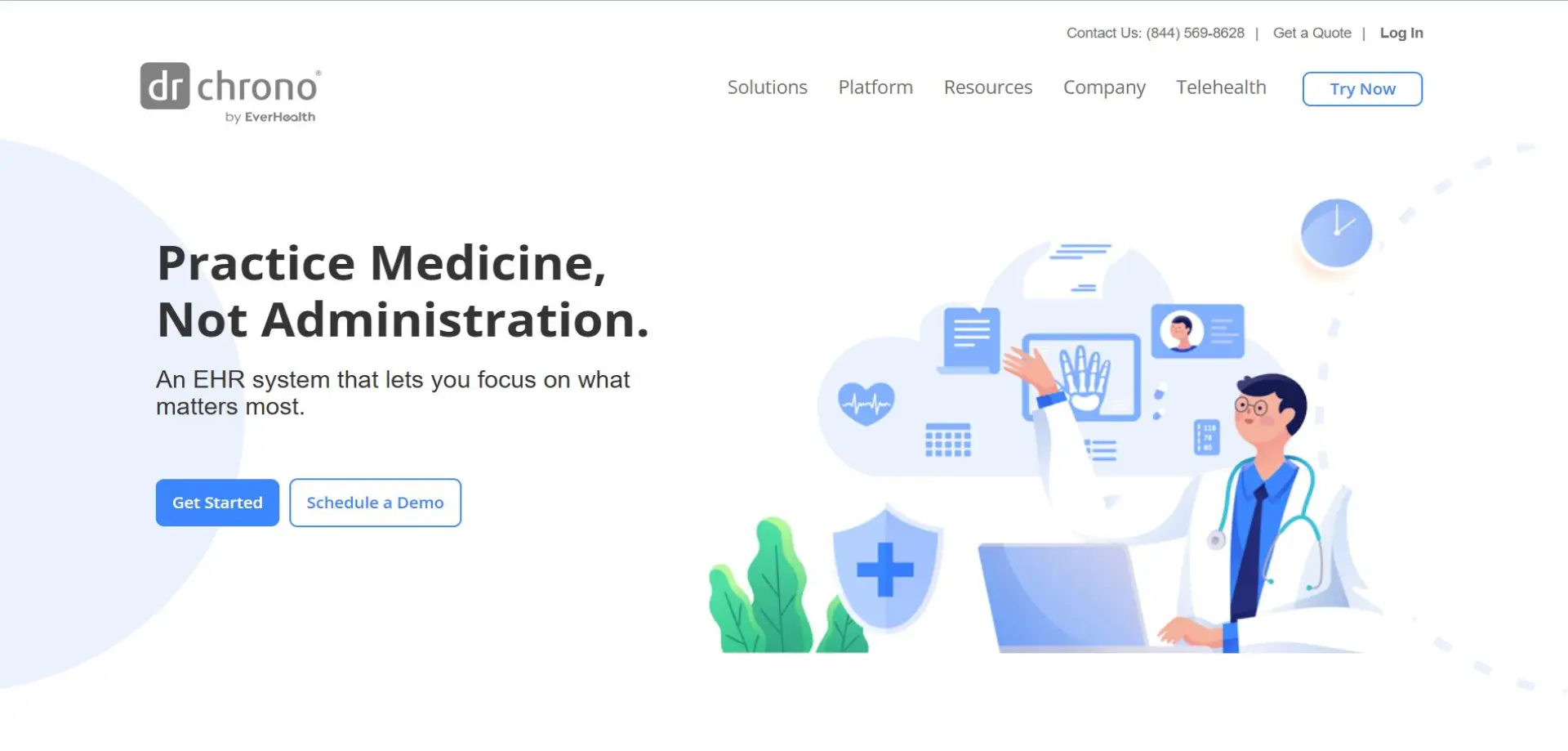
DrChrono combines claims, billing, EHR, and practice management in one environment. Its mobile accessibility appeals to practices that need flexibility and on-the-go visibility into billing and claims tasks.
7. CareCloud
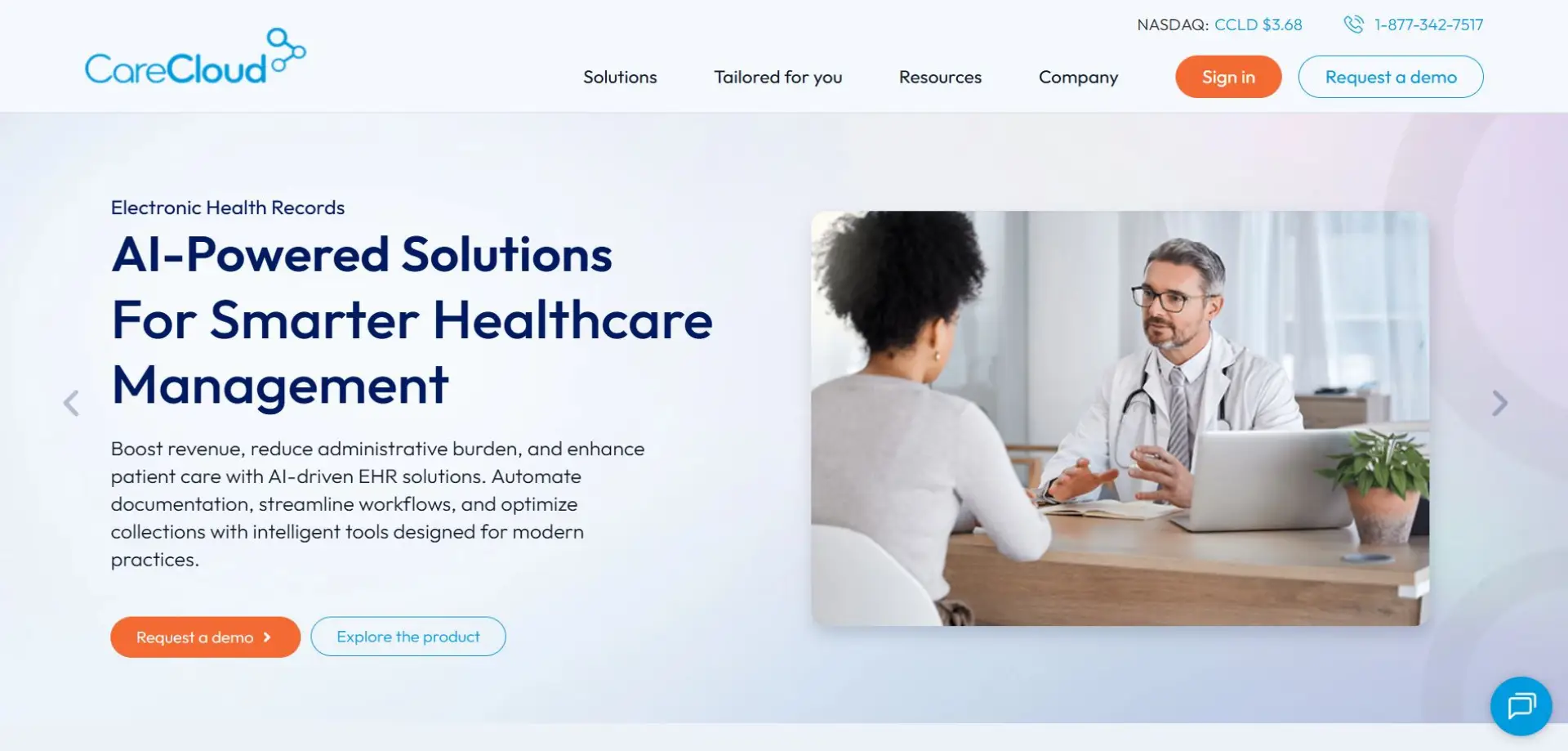
CareCloud provides a modular setup where practices can choose claims management tools or adopt the full suite. It’s useful for organizations transitioning from older systems but not yet ready for a full technology overhaul.
8. PracticeSuite
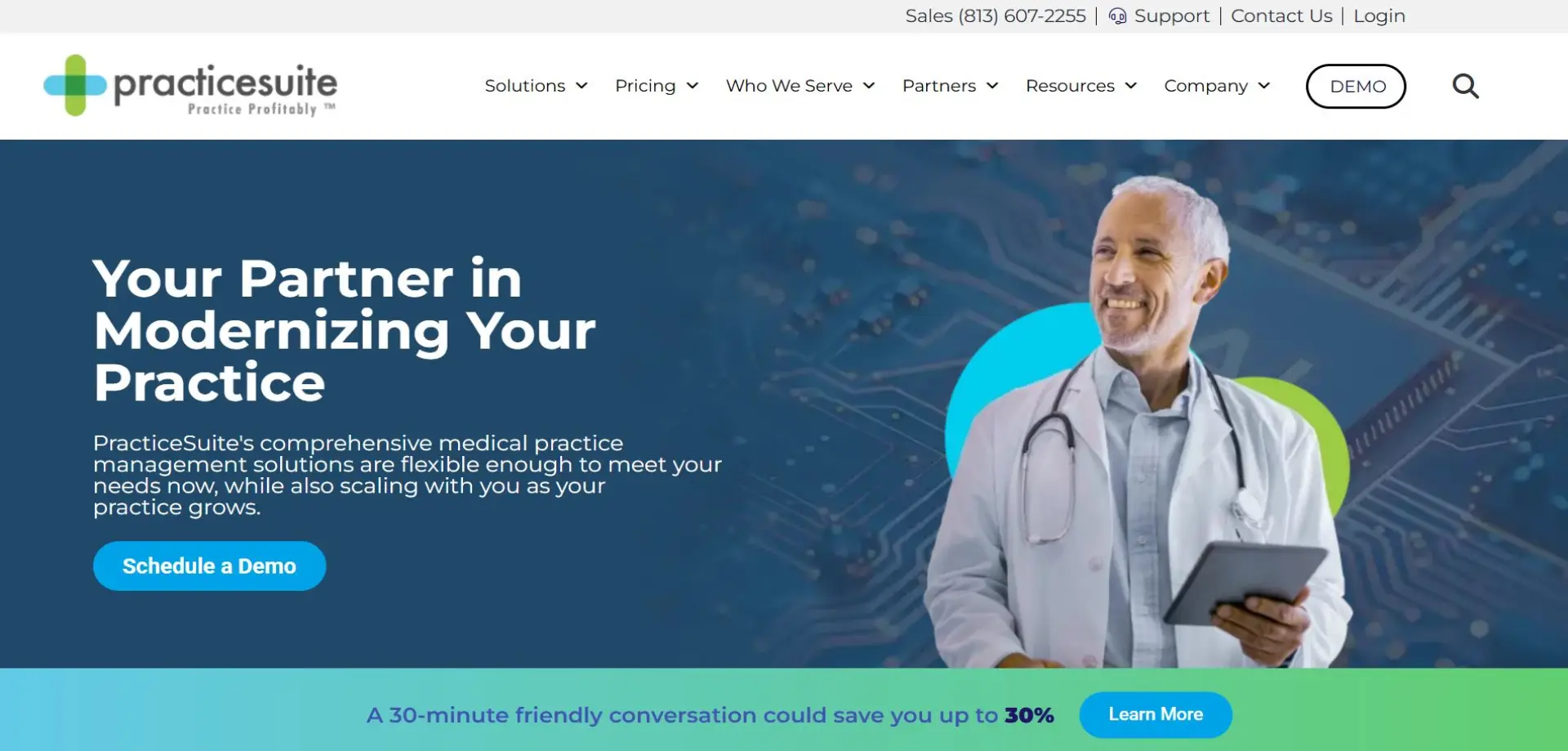
PracticeSuite offers an RCM environment that unifies billing, claims processing, and workflow coordination. Its platform supports charge capture, payment tracking, and claims administration to help providers streamline financial operations and maintain visibility across revenue tasks.
9. CollaborateMD
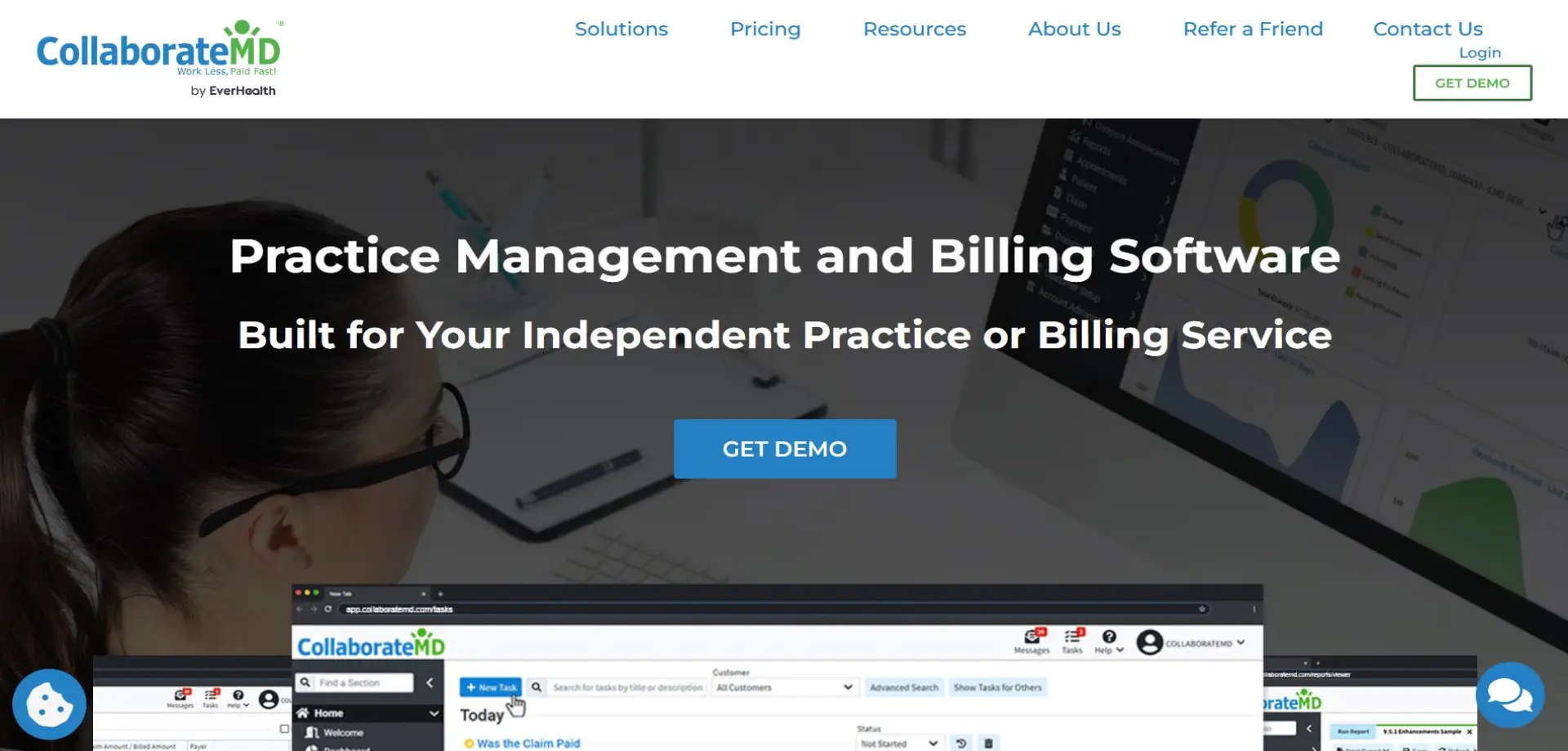
CollaborateMD offers cloud-based billing and claims management with real-time claim submission and built-in edits. Its platform supports claims processing, payment tracking, and practice management workflows. This is great for helping providers simplify revenue operations and stay on top of claims.
10. ModMed
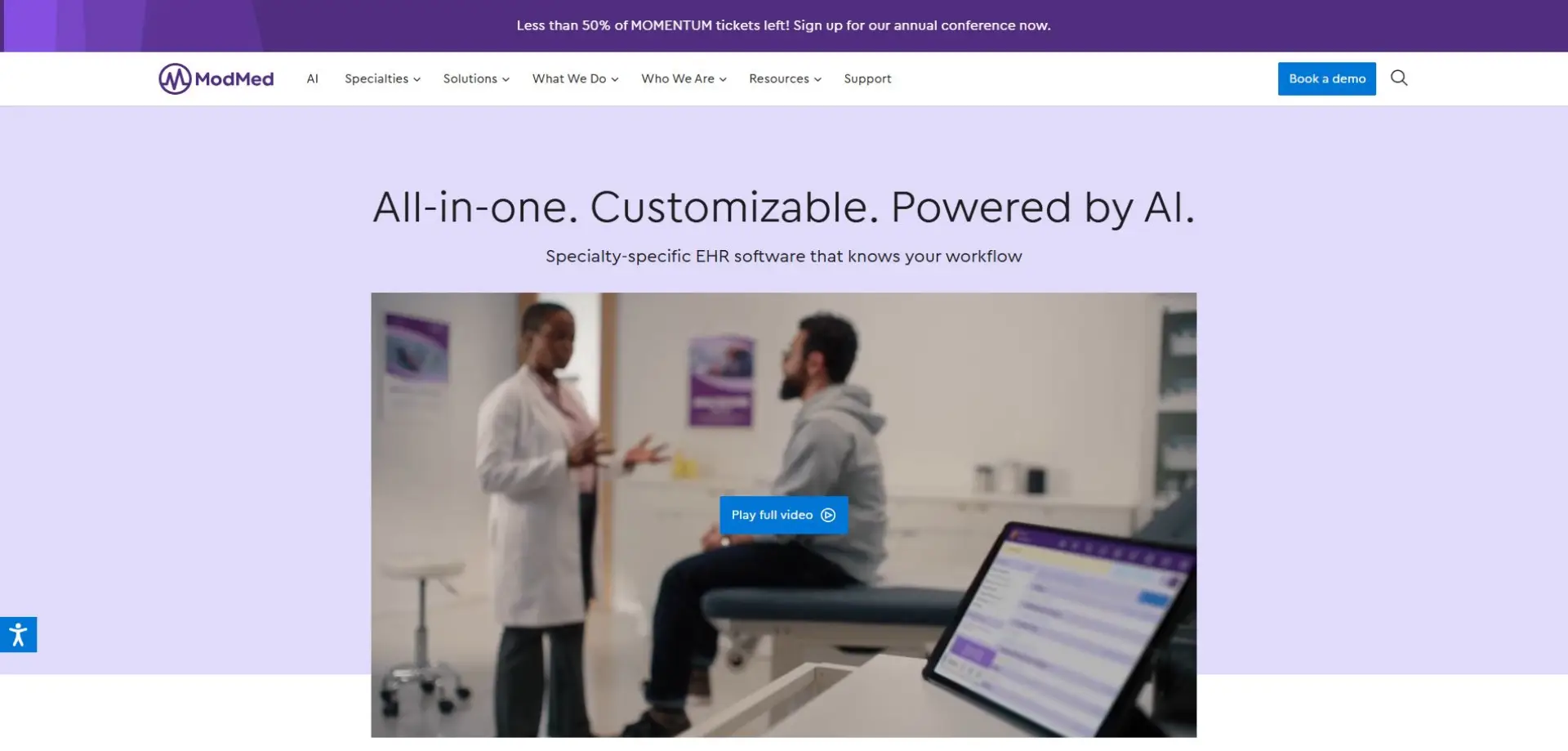
ModMed is known for specialty-focused clinical and billing tools. Its claims capabilities align well with practices that need workflows tailored to specialty-specific documentation and billing patterns.
Benefits of Medical Claims Software
Medical claims software offers advantages that go beyond simple automation. It helps healthcare organizations achieve smoother operations, more reliable financial performance, and reduced administrative burden.
Improved operational flow and faster payments
By providing a more structured environment for claim creation and submission, medical claims software reduces delays and helps organizations receive payments more consistently.
Fewer errors and more consistent accuracy
Medical software checks claim information for inconsistencies before submission, which reduces the likelihood of errors that might lead to delays or denials.
Better visibility into financial and claims data
With built-in reporting capabilities, providers can better understand their claims pipeline, spot bottlenecks, and make informed improvements to their revenue cycle.
Key Features of Medical Claims Software
While each system differs, most modern solutions include foundational capabilities designed to support a more efficient claims workflow. These features allow teams to work with organized data, maintain consistency, and reduce repetitive administrative tasks.
Integrated data environment
Medical claims software often connects with EHRs, scheduling, and practice management systems to ensure data flows smoothly between clinical and billing teams.
Support for consistent claims checking
Many platforms offer mechanisms that help staff catch claim issues earlier, ensuring more complete and accurate submissions.
Visibility and tracking capabilities
With tracking tools, staff can monitor claim progress and give the team a clearer view of where claims stand at every step.
Reporting and performance insights
Medical billing software tools also have features that help organizations assess their financial posture, spot trends, and plan improvements more effectively.
What to Consider When Purchasing Medical Claims Software
The medical claims software you choose should align with the size of your organization, your operational needs, and your long-term financial goals. Here are some things to consider to ensure that you reduce your administrative burden for years to come.
Practice size and claim volume
Smaller clinics may prioritize simplicity and affordability, while larger organizations may need deeper visibility, structure, and scalability.
Compatibility with existing systems
Ensure the software works well with your current EHR, practice management system, and billing tools.
Workflow organization and automation
Look for software that can support your team in handling claims more efficiently, even if automation is applied in simple or general ways.
Financial considerations and support quality
Evaluate subscription costs, onboarding, customer support responsiveness, and the ease of learning the system.
Choosing the Right Software for Long-Term Stability
The bottom line? Medical claims software plays a central role in keeping a healthcare organization financially secure. As billing requirements grow more complex and administrative responsibilities increase, the right platform provides structure, visibility, and reliability.
For 2026 and beyond, investing in dependable software ensures that your practice maintains consistent revenue, reduces avoidable errors, and focuses more time on what matters most: patient care.
If you’re aiming for cleaner claims, faster payments, and a more predictable revenue cycle, Aptarro is ready to help. Book a demo today to see how the software can help your practice management.